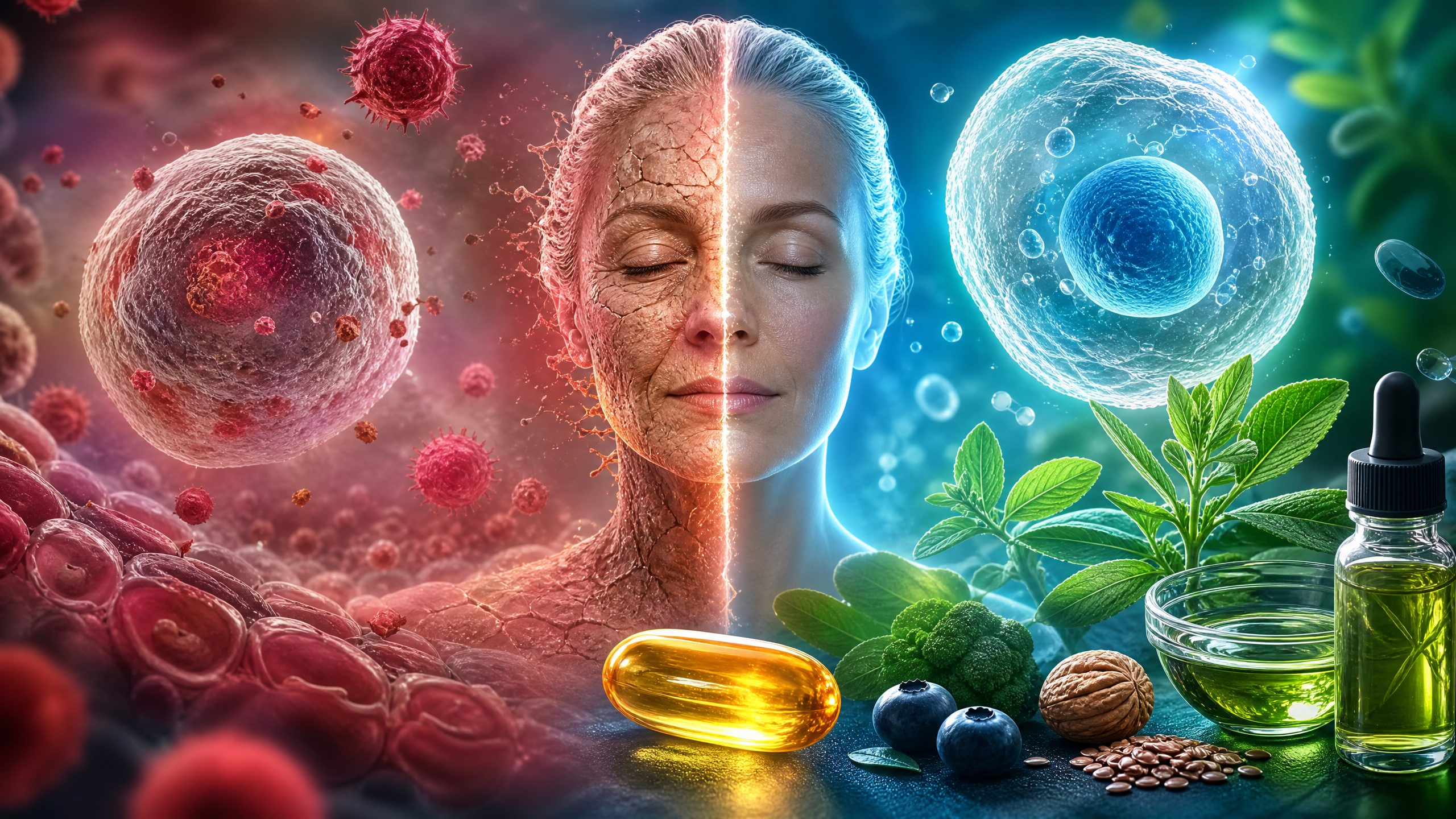
We all want to live long, healthy lives, but what if there was a silent, insidious process constantly accelerating aging and contributing to almost every chronic disease? This process is called inflammaging – a portmanteau of inflammation and aging. It’s not the acute, noticeable inflammation you get from an injury, but rather a chronic, low-grade, systemic inflammation that simmers beneath the surface, slowly eroding your health and vitality.
Think of it like a tiny, persistent fire burning within your body, constantly causing damage at a cellular level. This fire doesn’t just make you feel old; it makes you old, contributing to everything from joint pain and brain fog to heart disease and neurodegenerative disorders. The good news? You can actively biohack inflammaging, extinguishing that silent fire and promoting a more youthful, resilient state.
Let’s uncover the mechanisms behind inflammaging and explore powerful strategies to combat it.
What is Inflammaging? The Chronic Low-Grade Threat
Inflammaging is characterized by a persistent, low-grade, sterile (non-infectious) inflammatory state that increases with age. It’s a key driver of the aging process and a common denominator in many age-related diseases. [1]
Several factors contribute to this chronic inflammatory state:
- Cellular Senescence: As cells age, they can enter a state called senescence, where they stop dividing but remain metabolically active, secreting pro-inflammatory molecules. These
senescent cells, often called “zombie cells,” contribute significantly to inflammaging. [2] - Mitochondrial Dysfunction: As discussed in our previous post, compromised mitochondria can leak reactive oxygen species, triggering inflammatory pathways. [3]
- Gut Dysbiosis: An imbalanced gut microbiome can lead to increased intestinal permeability (“leaky gut”), allowing bacterial components to enter the bloodstream and provoke systemic inflammation. [4]
- Accumulation of Damaged Molecules: Over time, our bodies accumulate damaged proteins, lipids, and DNA. The immune system attempts to clear these, but this process can become dysregulated, leading to chronic inflammation.
- Chronic Stress and Poor Lifestyle: Persistent psychological stress, lack of sleep, poor diet, and sedentary behavior all contribute to a pro-inflammatory state.
Inflammaging isn’t just about feeling a bit stiff; it’s a fundamental process that accelerates biological aging and increases your risk for conditions like cardiovascular disease, neurodegenerative disorders (Alzheimer’s, Parkinson’s), type 2 diabetes, and even cancer. [5]
Biohacking Inflammaging: Extinguishing the Fire Within
The good news is that you don’t have to passively accept inflammaging as an inevitable part of getting older. By strategically implementing biohacking principles, you can actively reduce chronic inflammation and promote a healthier, more resilient aging process.
1. High-Dose Omega-3 Protocols: The Ultimate Anti-Inflammatory Fats
Omega-3 fatty acids, particularly EPA (eicosapentaenoic acid) and DHA (docosahexaenoic acid), are powerful natural anti-inflammatory agents. They work by modulating inflammatory pathways and producing specialized pro-resolving mediators (SPMs) that actively resolve inflammation. [6]
- How they help: Regular, high-quality omega-3 supplementation can significantly reduce systemic inflammation, improve cardiovascular health, and support brain function.
- Practical Tip: Aim for a combined EPA+DHA intake of 2-4 grams daily from a reputable fish oil or algal oil supplement. Look for products with third-party testing for purity and potency.
- Recommended Product: Nordic Naturals Ultimate Omega
2. Curcumin with Piperine: Nature’s Potent Anti-Inflammatory Duo
Curcumin, the active compound in turmeric, is renowned for its anti-inflammatory and antioxidant properties. However, curcumin has poor bioavailability on its own. Combining it with piperine (an extract from black pepper) dramatically enhances its absorption. [7]
- How it helps: Curcumin targets multiple inflammatory pathways, making it a broad-spectrum anti-inflammatory agent that can help reduce pain, improve joint health, and protect against cellular damage.
- Recommended Product: Thorne Research – Curcumin Phytosome with Meriva (or similar high-bioavailability curcumin with piperine).
3. Grounding (Earthing): Reconnecting with Earth’s Healing Energy
Grounding, or earthing, involves direct physical contact with the Earth’s surface (e.g., walking barefoot on grass, sand, or soil). This practice allows your body to absorb free electrons from the Earth, which act as powerful antioxidants. [8]
- How it helps: These electrons can neutralize free radicals, reduce inflammation, and improve blood viscosity, thereby mitigating the effects of inflammaging.
- Practical Tip: Spend at least 30 minutes daily barefoot outdoors. If direct contact isn’t feasible, consider using grounding mats or sheets indoors.
- Recommended Product: Grounding Mat for Desk/Floor
4. Eliminate “Seed Oils” (PUFAs): Removing Inflammatory Triggers
Many common vegetable oils (like soybean, corn, sunflower, safflower, and canola oil), often referred to as “seed oils,” are high in unstable polyunsaturated fatty acids (PUFAs), particularly omega-6 linoleic acid. When consumed in excess and heated, these oils can become highly inflammatory. [9]
- How it helps: Reducing your intake of these oils and replacing them with stable, healthy fats (like olive oil, avocado oil, coconut oil, and butter/ghee from grass-fed animals) can significantly lower your inflammatory load.
- Internal Link: Beyond Calories: How Biohacking Nutrition Fuels Peak Athletic Performance
5. Gut Health Optimization: The Foundation of Anti-Inflammation
As explored in our previous post, a healthy gut is crucial for a healthy immune system and low inflammation. Addressing gut dysbiosis and leaky gut is a primary strategy against inflammaging.
- How it helps: By promoting a diverse microbiome and strengthening the gut barrier, you prevent inflammatory compounds from entering your bloodstream.
- Internal Link: The Gut-Brain Axis: Biohacking Your Way Out of Anxiety
Actionable Steps for Combating Inflammaging
Ready to turn down the heat on inflammation? Here’s a quick checklist to get started:
| Strategy | Actionable Step | Frequency |
|---|---|---|
| Omega-3s | Supplement with 2-4g EPA+DHA | Daily |
| Curcumin | Take high-bioavailability curcumin with piperine | Daily |
| Grounding | Spend time barefoot outdoors or use grounding products | Daily |
| Dietary Fats | Replace seed oils with healthy fats | Consistently |
| Gut Health | Focus on fiber, fermented foods, and avoid irritants | Daily |
| Stress Management | Practice mindfulness, deep breathing | Daily |
| Sleep | Prioritize 7-9 hours of quality sleep | Nightly |
When to Seek Professional Guidance
While these biohacking strategies are powerful, chronic inflammation can be a symptom of underlying medical conditions. If you experience persistent pain, swelling, unexplained fatigue, or other concerning symptoms, it’s crucial to consult with a healthcare professional. They can help identify the root cause of your inflammation and recommend appropriate medical interventions.
Conclusion: Age Gracefully, Inflame Less
Inflammaging is a silent adversary, but it’s not an unconquerable one. By understanding its mechanisms and proactively implementing targeted biohacking strategies, you can significantly reduce chronic inflammation, protect your cells, and promote a healthier, more vibrant longevity. It’s about taking control of your biological destiny and ensuring that your later years are filled with vitality, not just existence.
Start extinguishing that silent fire today. Your future self will thank you for it!
References
[1] Franceschi, C., & Campisi, J. (2014). Chronic inflammation (inflammaging) and its potential contribution to age-associated diseases. The Journals of Gerontology Series A: Biological Sciences and Medical Sciences, 69(Suppl_1), S4-S9. https://pubmed.ncbi.nlm.nih.gov/24833586/
[2] Childs, B. G., Durik, M., Baker, K. J., & van Deursen, J. M. (2015). Cellular senescence in aging and age-related disease: from mechanisms to therapy. Nature Medicine, 21(12), 1424-1435. https://pubmed.ncbi.nlm.nih.gov/26647341/
[3] Liguori, I., Russo, G., Curcio, F., Bulli, G., Aran, D. L., Della-Morte, F., … & Cacciatore, F. (2018). Oxidative stress, aging, and diseases. Clinical Interventions in Aging, 13, 757. https://pubmed.ncbi.nlm.nih.gov/29731581/
[4] Vancamelbeke, M., & Vermeire, S. (2017). The intestinal barrier: a fundamental role in inflammatory bowel disease. Expert Review of Gastroenterology & Hepatology, 11(9), 821-834. https://pubmed.ncbi.nlm.nih.gov/28608103/
[5] Furman, D., Campisi, J., Verdin, E., Carrera-Bastos, P., Targ, S., Franceschi, C., … & Slavich, G. M. (2019). Chronic inflammation in the etiology of disease across the life span. Nature Medicine, 25(12), 1822-1832. https://pubmed.ncbi.nlm.nih.gov/31806905/
[6] Serhan, C. N. (2014). Pro-resolving lipid mediators are masters of inflammation. Nature Reviews Immunology, 14(3), 166-175. https://pubmed.ncbi.nlm.nih.gov/24566428/
[7] Hewlings, S. J., & Kalman, D. S. (2017). Curcumin: A review of its effects on human health. Foods, 6(10), 92. https://pubmed.ncbi.nlm.nih.gov/29065496/
[8] Oschman, J. L., Chevalier, G., & Brown, R. (2015). The effects of grounding (earthing) on inflammation, the immune response, wound healing, and prevention and treatment of chronic inflammatory and autoimmune diseases. Journal of Inflammation Research, 8, 83. https://pubmed.ncbi.nlm.nih.gov/26236314/
[9] Simopoulos, A. P. (2016). An increase in the omega-6/omega-3 fatty acid ratio increases the risk for obesity. Nutrients, 8(3), 128. https://pubmed.ncbi.nlm.nih.gov/26950145/