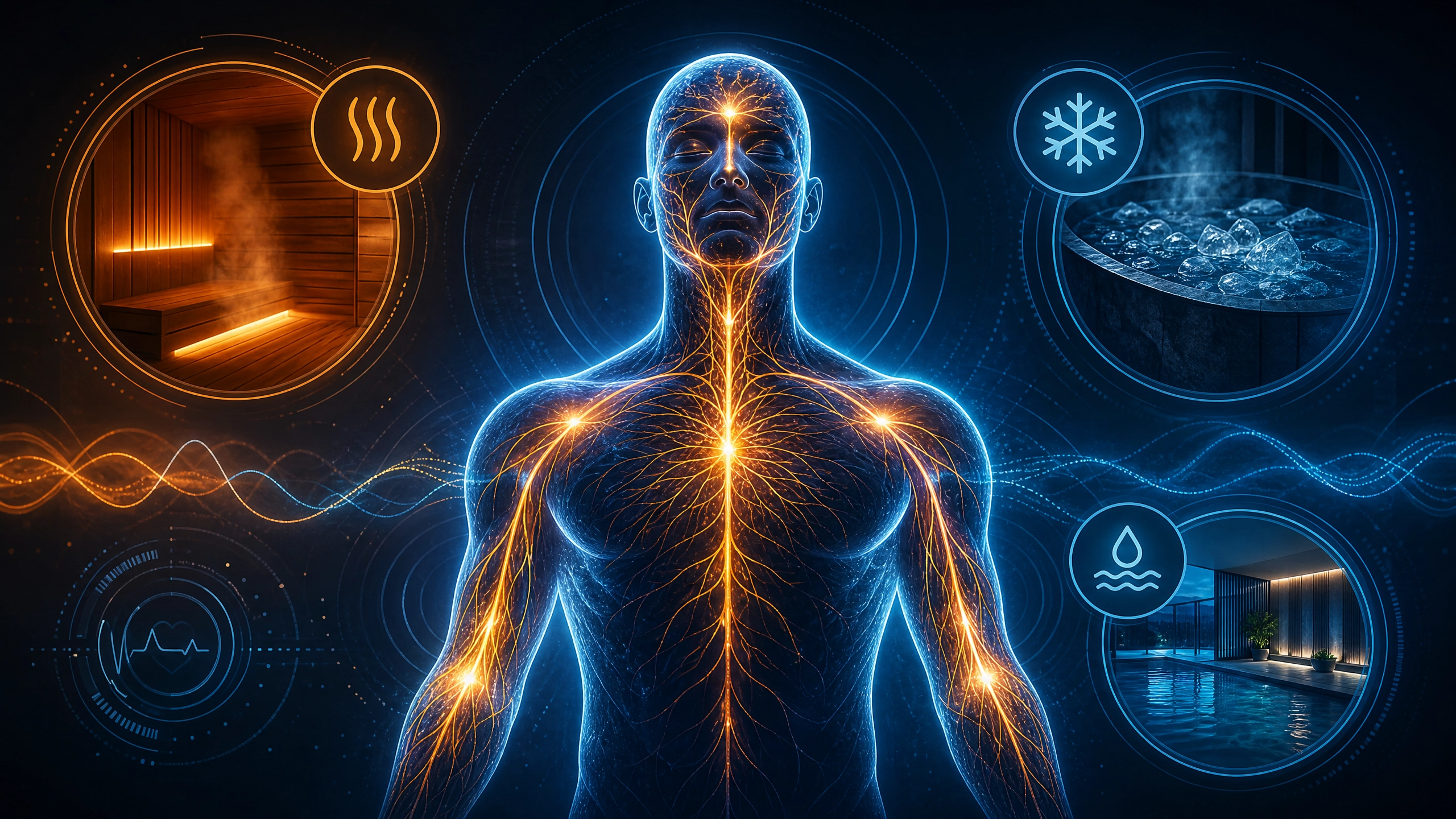
Your current routine of swimming, sauna, hot/cold exposure, and Jacuzzi is a powerful recovery protocol used by many elite athletes and biohackers. However, this specific combination creates a unique set of physiological stressors that can directly trigger the internal vibrations you are feeling in your arm, chest, and face.
Below is a breakdown of how each element of your routine may be contributing to these sensations and how you can optimize your protocol to eliminate them.
1. The “Sweat Factor”: Electrolyte Depletion
The most significant impact of regular sauna and Jacuzzi use is the rapid loss of essential minerals.
- The Mechanism: A single 20-minute sauna session can cause you to lose up to 1 liter (34 oz) of sweat. While we often focus on water loss, sweat also flushes out sodium, potassium, and magnesium.
- The Vibration Link: As discussed in our previous research, magnesium is the “master mineral” for nerve stability. When you deplete magnesium through intense sweating, your nerves can become “twitchy” or hyper-excitable, manifesting as that subtle internal hum or vibration.
- Internal Link: The Science Of Hydration: Biohacking Your Water Intake
2. Thermal Stress and “Nerve Shock”
Alternating between extreme heat (sauna/Jacuzzi) and extreme cold (cold plunge/showers) is known as Contrast Therapy.
- The Mechanism: Heat causes your blood vessels to widen (vasodilation), while cold causes them to snap shut (vasoconstriction). This is essentially a “workout” for your circulatory and nervous systems.
- The Vibration Link: If your nervous system is already sensitized (due to stress or low magnesium), the rapid shift in blood flow and temperature can cause paresthesia—unusual sensations like tingling or vibrations. The fact that you feel it in your face and chest suggests a systemic response to these thermal shifts.
3. Swimming and Physical Exertion
Swimming is a full-body workout that further utilizes your body’s mineral stores.
- The Mechanism: Even in a pool, you are sweating (though you may not feel it). The physical demand on your muscles requires constant nerve signaling, which consumes magnesium and calcium.
- The Vibration Link: If you go straight from a swim into a sauna without replenishing electrolytes, you are entering the heat in a “deficit,” making the vibration sensations much more likely to occur randomly later in the day.
Tailored Recommendations for Your Routine
To keep the benefits of your routine without the unpleasant vibrations, try these biohacking adjustments:
A. The “Pre-Load” Protocol
Don’t wait until after your routine to hydrate. Drink a high-quality electrolyte mix 30 minutes before you enter the sauna or pool.
- Focus on: Sodium (1000mg) and Magnesium (60-100mg) in your pre-workout/pre-sauna drink.
- Recommended Product: LMNT Electrolyte Drink Mix
B. Post-Sauna Magnesium Reset
Since you are losing magnesium through sweat, consider a topical application. Magnesium oil or a lotion applied to the arm and chest after your shower can bypass the digestive system and provide immediate relief to local nerves.
- Recommended Product: Ancient Minerals Magnesium Oil
C. Adjust Your Contrast Timing
If the vibrations are particularly strong after the cold plunge, try ending your routine with lukewarm water rather than extreme cold. This allows your nervous system to return to a “baseline” state more gradually.
D. Monitor Your “Jackie” (Jacuzzi) Time
Extended time in a hot tub (Jacuzzi) can lead to more significant dehydration than a dry sauna because the water prevents sweat from evaporating, making it harder for your body to cool down. Limit Jacuzzi sessions to 15 minutes if you notice vibrations peaking afterward.
Summary of Action Steps
| Routine Element | Potential Issue | Optimization Step |
|---|---|---|
| Sauna / Jacuzzi | Rapid Magnesium & Sodium loss | Drink 20oz of water + electrolytes during and after. |
| Hot/Cold Exposure | Nervous system “shock” | End with a neutral temperature; focus on deep breathing during the cold. |
| Swimming | Exertion-based mineral depletion | Ensure a magnesium-rich meal or supplement post-swim. |
By addressing the electrolyte gap created by your active recovery, you should see a significant reduction in these random vibrations. If they persist despite these changes, it would be wise to consult a neurologist to ensure there isn’t an underlying nerve sensitivity issue.
- Internal Link: The Biohacker’s Guide To Essential Supplements