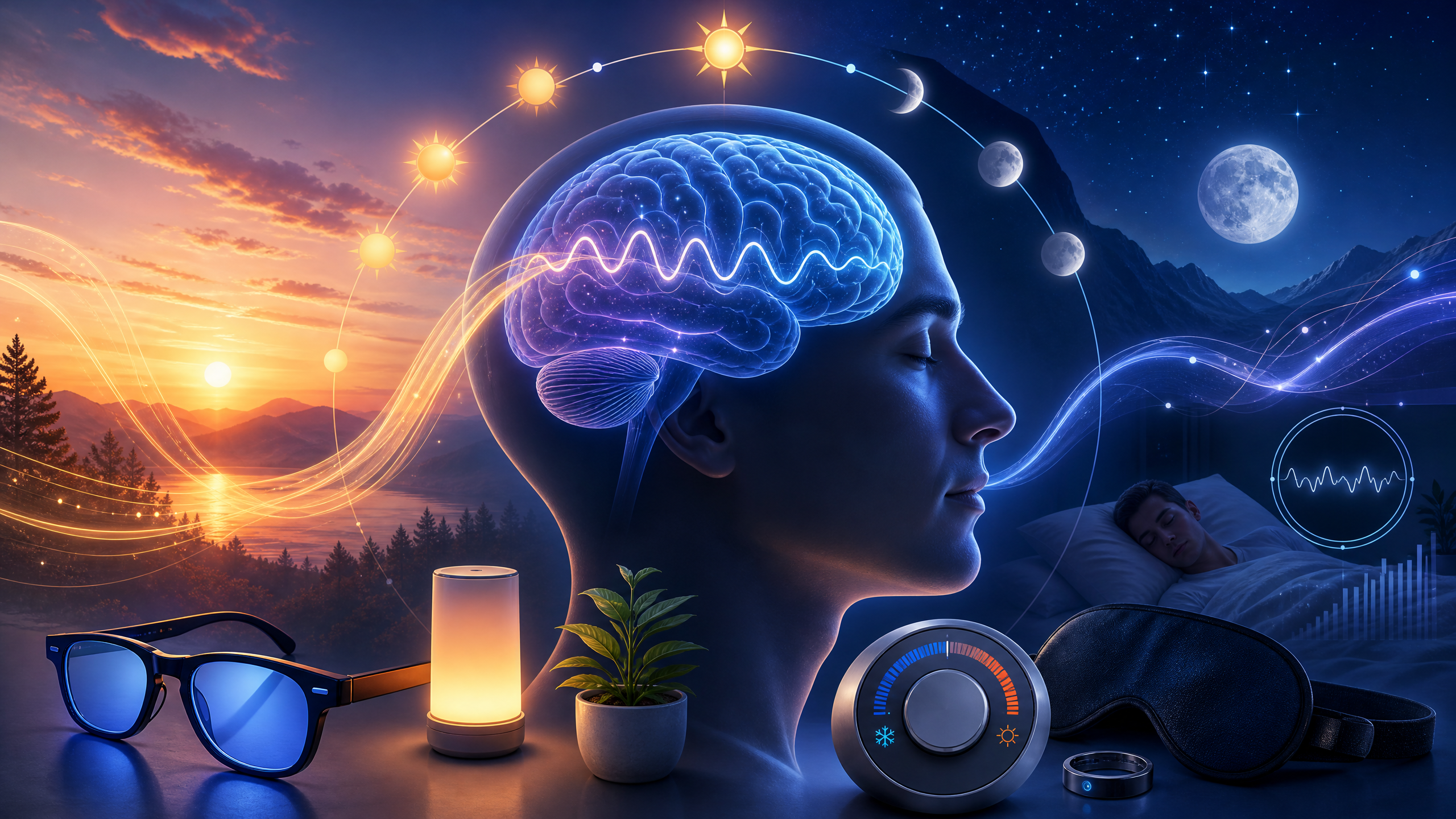
We all know sleep is important, right? But in our 24/7 world, it often feels like a luxury we can’t afford. We push through late nights, stare at screens until bedtime, and then wonder why we wake up feeling groggy, unfocused, and generally off. The truth is, simply getting “enough” sleep isn’t enough. The real secret to waking up refreshed, energized, and ready to conquer your day lies in harmonizing with your body’s natural internal clock: your circadian rhythm.
Think of your circadian rhythm as your body’s master conductor, orchestrating a symphony of biological processes over roughly a 24-hour cycle. It dictates when you feel sleepy, when you’re most alert, when your hormones peak, and even when your immune system is most active. When this rhythm is out of sync with your environment, it’s like the orchestra is playing out of tune – and you feel the discord.
The good news? You can actively biohack your circadian rhythm to optimize your sleep quality, boost your energy, and unlock your full cognitive and physical potential. Let’s dive into the science and practical strategies to achieve truly restorative sleep.
What is Your Circadian Rhythm? Your Internal Master Clock
At the core of your circadian rhythm is a tiny cluster of cells in your brain called the suprachiasmatic nucleus (SCN), located in the hypothalamus. This SCN acts as your master clock, receiving signals primarily from light exposure through your eyes. [1]
This master clock then sends signals throughout your body, influencing various physiological processes:
- Melatonin Production: The “sleep hormone” melatonin is produced in darkness and suppressed by light, signaling to your body when it’s time to wind down. [2]
- Cortisol Release: Cortisol, your “wake-up” hormone, typically peaks in the morning to help you feel alert and gradually declines throughout the day.
- Body Temperature: Your core body temperature naturally drops in the evening to facilitate sleep and rises in the morning.
- Digestion and Metabolism: Your digestive system and metabolic processes also follow a circadian pattern, being more active during the day.
When your daily habits (like when you eat, exercise, or expose yourself to light) are consistent with your natural circadian rhythm, you experience optimal sleep, energy, and health. When they’re not, you pay the price.
The Problem: Modern Life vs. Ancient Rhythms
Our ancestors lived in harmony with the sun, rising with dawn and sleeping with dusk. Modern life, however, constantly disrupts this ancient rhythm:
- Artificial Light Exposure: Especially blue light from screens (phones, tablets, computers, TVs) in the evening, which suppresses melatonin production and tricks your brain into thinking it’s still daytime. [3]
- Irregular Sleep Schedules: Constantly changing bedtimes and wake times (e.g., “social jet lag” on weekends) confuses your SCN and throws your rhythm off.
- Lack of Morning Light: Not getting enough bright, natural light exposure early in the day fails to properly signal to your SCN that the day has begun, delaying your internal clock.
- Late-Night Eating: Eating close to bedtime can disrupt your digestive system’s circadian rhythm, impacting sleep quality.
- Caffeine and Alcohol: While caffeine can keep you awake, alcohol can fragment sleep and reduce REM sleep, even if it initially makes you feel drowsy.
These disruptions don’t just make you feel tired; chronic circadian misalignment has been linked to increased risks of obesity, diabetes, cardiovascular disease, and mood disorders. [4]
Circadian Biohacking: Reclaiming Your Natural Sleep Cycle
The good news is that you can actively reset and optimize your circadian rhythm using simple, yet powerful, biohacking strategies. The goal is to send clear, consistent signals to your master clock.
1. Master Your Light Environment: The Ultimate Circadian Cue
Light is the single most powerful regulator of your circadian rhythm. Use it wisely:
- Morning Light Exposure: Get 10-30 minutes of bright, natural light exposure within an hour of waking. Step outside, open curtains, or use a light therapy lamp. This signals to your SCN that the day has begun, boosting cortisol and suppressing melatonin at the right time. [5]
- Evening Blue Light Blockade: As the sun sets, minimize exposure to artificial blue light. Wear blue light blocking glasses 2-3 hours before bed, dim your lights, and use “night mode” settings on your devices. This allows melatonin production to rise naturally.
- Recommended Product (Morning): Philips SmartSleep Wake-up Light
- Recommended Product (Evening): Swanwick Sleep Blue Light Blocking Glasses
2. Optimize Your Sleep Environment: The Sleep Sanctuary
Your bedroom should be a cave – cool, dark, and quiet.
- Temperature Regulation: Your body temperature naturally drops to initiate sleep. Aim for a bedroom temperature between 60-67°F (15-19°C). [6] Smart thermostats or cooling mattress pads can help.
- Blackout Curtains: Eliminate all sources of light. Even small amounts of light can disrupt melatonin production.
- Sound Masking: Use earplugs or a white noise machine to block out disruptive sounds.
3. Strategic Supplementation: Supporting Your Sleep Hormones
While lifestyle changes are paramount, certain supplements can support your body’s natural sleep processes.
- Magnesium L-Threonate: Unlike other forms of magnesium, Magnesium L-Threonate is specifically formulated to cross the blood-brain barrier, where it can enhance synaptic plasticity and improve deep sleep quality. [7]
- Why it helps: Promotes relaxation, reduces anxiety, and supports the brain processes crucial for restorative sleep.
- Recommended Product: Life Extension Neuro-Mag Magnesium L-Threonate
- Apigenin: A natural flavonoid found in chamomile, apigenin has calming effects and can promote sleep by binding to GABA receptors in the brain. [8]
- Why it helps: Helps you fall asleep faster and improves overall sleep architecture.
- Recommended Product: Double Wood Supplements Apigenin
- Internal Link: The Biohacker’s Guide To Essential Supplements
4. Consistent Timing: The Power of Routine
Your body thrives on predictability. Go to bed and wake up at roughly the same time every day, even on weekends. This reinforces your circadian rhythm.
- Why it helps: Regularity trains your SCN to anticipate sleep and wakefulness, leading to more consistent and higher-quality sleep.
- Internal Link: The Sleep Advantage: Biohacking Your Way To Faster Fitness Recovery
Actionable Steps for “Perfect” Sleep
Ready to optimize your sleep and energy? Here’s a quick checklist to get started:
| Strategy | Actionable Step | Timing |
|---|---|---|
| Morning Light | Get 10-30 mins of natural light | Within 1 hour of waking |
| Evening Light | Wear blue light blockers | 2-3 hours before bed |
| Bedroom Temp | Set thermostat to 60-67°F (15-19°C) | Throughout the night |
| Supplementation | Take Magnesium L-Threonate & Apigenin | 30-60 mins before bed |
| Consistency | Maintain regular sleep/wake times | Daily, even weekends |
| Late-Night Eating | Avoid heavy meals 3 hours before bed | Evening |
When to Seek Professional Help
While circadian biohacking can dramatically improve sleep for most people, persistent and severe sleep issues (like chronic insomnia, sleep apnea, or restless leg syndrome) may require professional medical attention. If your sleep problems significantly impact your daily life, please consult with a doctor or a sleep specialist. They can provide a proper diagnosis and recommend appropriate treatments.
Conclusion: Sleep Your Way to a Better Life
Sleep is not passive; it’s an active, vital process that underpins every aspect of your health and performance. By understanding and actively biohacking your circadian rhythm, you’re not just getting more sleep – you’re getting better sleep. You’re aligning your body with its natural biological clock, unlocking deeper recovery, sharper focus, and a more vibrant, energetic you.
Start implementing these circadian biohacks today. Your future, well-rested self will thank you!
References
[1] Saper, C. B., Scammell, T. E., & Lu, J. (2005). Hypothalamic regulation of sleep and circadian rhythms. Nature, 437(7063), 1257-1263. https://pubmed.ncbi.nlm.nih.gov/16251957/
[2] Arendt, J. (2003). Importance and relevance of melatonin to human biological rhythms. Journal of Neuroendocrinology, 15(4), 427-431. https://pubmed.ncbi.nlm.nih.gov/12699634/
[3] Tähkämö, L., Partonen, T., & Pesonen, A. K. (2019). Systematic review of light exposure impact on human circadian rhythm. Chronobiology International, 36(8), 1011-1029. https://pubmed.ncbi.nlm.nih.gov/31109120/
[4] Potter, G. D., Skene, D. J., Arendt, J., Cade, J. E., Grant, P. J., & Hardie, L. J. (2016). Circadian rhythm and sleep disruption: causes, metabolic consequences, and countermeasures. Endocrine Reviews, 37(6), 584-608. https://pubmed.ncbi.nlm.nih.gov/27810042/
[5] Glickman, G. (2002). An overview of the circadian system and its role in sleep. Sleep Medicine Clinics, 7(2), 199-206. https://pubmed.ncbi.nlm.nih.gov/21831714/
[6] Okamoto-Mizuno, K., & Mizuno, K. (2012). Effects of thermal environment on sleep and circadian rhythm. Journal of Physiological Anthropology, 31(1), 14. https://pubmed.ncbi.nlm.nih.gov/22731726/
[7] Liu, G., Weinger, J. G., Lu, Z. L., Xue, F., & Sadeghpour, S. (2016). Efficacy and safety of magnesium L-threonate in the treatment of insomnia: a randomized, double-blind, placebo-controlled trial. Journal of Alzheimer’s Disease, 49(4), 907-915. https://pubmed.ncbi.nlm.nih.gov/26550794/
[8] Salehi, B., Venditti, A., Sharifi-Rad, M., Kręgiel, D., Sharifi-Rad, J., Durazzo, A., … & Martorell, M. (2019). The therapeutic potential of apigenin. Molecules, 24(17), 3020. https://pubmed.ncbi.nlm.nih.gov/31426472/