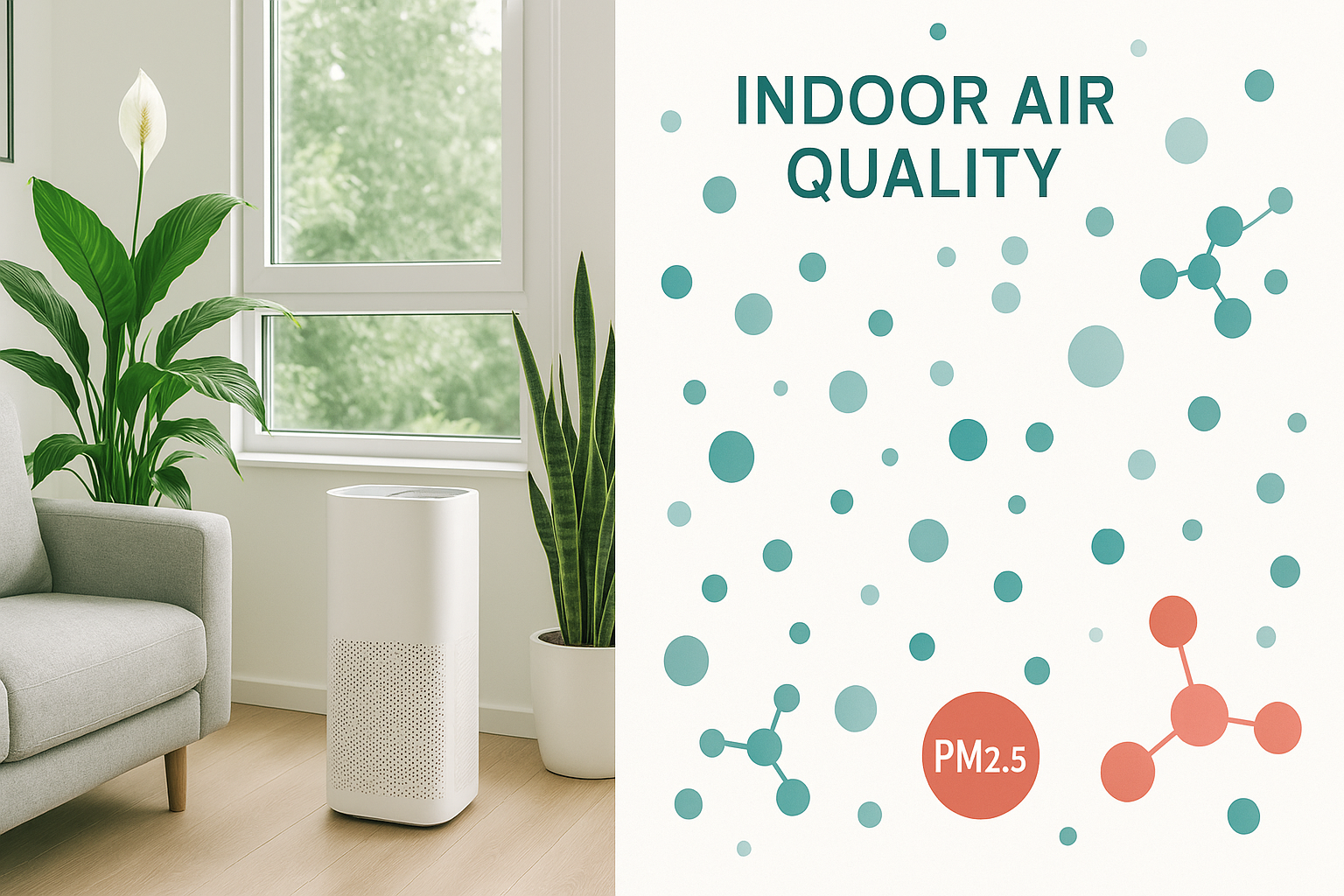
Your home might be more polluted than the streets outside—here’s how to fix it.
You’ve probably spent a small fortune optimizing your diet, tracking your sleep with wearable technology, and fine-tuning your workout recovery protocols. But there’s one critical aspect of your health that you’re probably overlooking every single day: the air you breathe at home.
Here’s the uncomfortable truth that most people don’t realize: the air inside your home can be 2 to 5 times more polluted than the air outside—and in some cases, up to 100 times worse. Considering that we spend approximately 90% of our time indoors, this isn’t just a minor inconvenience. It’s a major health issue that deserves the same attention you give to your nutrition and fitness.
Welcome to the world of environmental biohacking, where we take control of our indoor air quality to optimize our health, cognitive performance, and longevity. In this comprehensive guide, I’ll walk you through the hidden dangers lurking in your home’s air and give you science-backed strategies to transform your living space into a health-promoting sanctuary.
 Loading…

 Reload document
  Open in new tab
 The Shocking Reality of Indoor Air Pollution
Let’s start with a reality check. When you think about air pollution, you probably picture smoggy city streets or industrial smokestacks. But the Environmental Protection Agency (EPA) has identified indoor air pollution as one of the top five environmental health risks. The reason? Modern homes are designed to be energy-efficient, which means they’re also incredibly good at trapping pollutants inside.
Think about it: we’ve sealed our homes tighter than ever before to save on heating and cooling costs. While that’s great for your energy bill, it’s terrible for air quality. Without adequate ventilation, pollutants accumulate to levels that can seriously impact your health and performance.
The most vulnerable among us—children, the elderly, and those with respiratory or cardiovascular conditions—spend the longest periods indoors and face the greatest risk. But even if you’re young and healthy, poor indoor air quality is silently undermining your cognitive function, sleep quality, and long-term health.

What’s Actually Polluting Your Indoor Air?
Understanding what you’re up against is the first step in biohacking your home environment. Indoor air pollution isn’t just one thing—it’s a complex mixture of pollutants from multiple sources. Let me break down the main culprits:
Volatile Organic Compounds (VOCs)
VOCs are gases emitted from certain solids and liquids, and they’re everywhere in your home. Formaldehyde, one of the most common and concerning VOCs, off-gasses from pressed wood furniture, cabinetry, and even some flooring. Benzene comes from cleaning products, paints, and adhesives. Toluene is found in paint thinners and nail polish removers.
According to the National Institute of Environmental Health Sciences, exposure to VOCs can cause eye, nose, and throat irritation in the short term, and may contribute to liver, kidney, and central nervous system damage with long-term exposure.
Particulate Matter (PM)
These are tiny particles suspended in the air that you can breathe deep into your lungs. PM2.5 (particles smaller than 2.5 micrometers) is particularly dangerous because it can penetrate deep into your respiratory system and even enter your bloodstream. Common sources include cooking (especially frying and grilling), candles, fireplaces, and outdoor pollution that seeps indoors.
Research published in Science Direct has linked particulate matter exposure to ischemic heart disease, stroke, and arrhythmia. This isn’t just about respiratory health—it’s about your cardiovascular system and longevity.
Biological Contaminants
Your home is teeming with microscopic life, and not all of it is friendly. Mold spores thrive in damp environments like bathrooms and basements. Dust mites live in your bedding, carpets, and upholstered furniture. Pet dander becomes airborne and can trigger allergic reactions even in people who don’t think they’re allergic. Pollen finds its way inside through open windows and on your clothing.
These biological pollutants are major triggers for allergies and asthma, and they can significantly impact your sleep quality and recovery.
Combustion Pollutants
If you have gas appliances, you need to pay attention to this category. Carbon monoxide is an odorless, colorless gas produced by gas stoves, furnaces, and water heaters. Even at low levels, it can cause headaches, dizziness, and fatigue—symptoms that many people dismiss as just being tired or stressed.
Nitrogen dioxide, another combustion byproduct, can irritate your airways and reduce lung function. A poorly ventilated kitchen with a gas stove can expose you to levels of nitrogen dioxide that would be considered unacceptable outdoors.
The Health Impact: More Than Just Allergies
Poor indoor air quality isn’t just about sniffling and sneezing. The health impacts are far-reaching and can seriously undermine your biohacking efforts in other areas of life.
Short-Term Effects
In the short term, exposure to indoor air pollutants can cause:
- Eye, nose, and throat irritation that makes you uncomfortable and less productive
- Headaches and fatigue that you might attribute to poor sleep or stress
- Dizziness and nausea that can derail your workout plans
- Allergic reactions that trigger inflammation throughout your body
- Asthma exacerbation that limits your physical performance
These symptoms might seem minor, but they add up. If you’re constantly dealing with low-grade inflammation and discomfort, you’re not operating at your peak potential.
Long-Term Effects
The long-term consequences are even more serious. According to the World Health Organization, chronic exposure to indoor air pollution is linked to:
- Respiratory diseases including chronic obstructive pulmonary disease (COPD)
- Heart disease and stroke—indoor air pollution is a significant cardiovascular risk factor
- Cognitive deficits—your brain needs clean air to function optimally
- Lung cancer—particularly from radon exposure and secondhand smoke
If you’re serious about longevity and healthspan, you can’t ignore indoor air quality. It’s not just about adding years to your life—it’s about ensuring those years are high-quality and high-performance.
The Three Pillars of Indoor Air Quality Biohacking
Now that you understand the problem, let’s talk solutions. The EPA recommends a three-pronged approach to improving indoor air quality, and I’ve adapted it specifically for biohackers who want to optimize their home environment.
Pillar 1: Source Control
The most effective strategy is to eliminate or reduce pollutant sources at their origin. This is the biohacker’s equivalent of fixing your diet before relying on supplements—address the root cause first.
Practical source control strategies:
Switch to low-VOC or VOC-free products. When buying furniture, look for solid wood instead of pressed wood products. Choose paints, adhesives, and cleaning products labeled as low-VOC or zero-VOC.
Maintain your combustion appliances. Have your gas stove, furnace, and water heater professionally inspected and serviced annually. An improperly adjusted gas stove can emit significantly more carbon monoxide than a well-maintained one.
Eliminate tobacco smoke completely. There’s no safe level of secondhand smoke exposure. If you or anyone in your household smokes, make it an outdoor-only activity.
Control moisture to prevent mold. Fix leaks immediately, use exhaust fans in bathrooms and kitchens, and maintain indoor humidity between 30-50%. More on this later.
Choose cleaning products wisely. Many conventional cleaning products are loaded with VOCs and other harmful chemicals. Look for plant-based, fragrance-free alternatives, or make your own using vinegar, baking soda, and essential oils.
Pillar 2: Ventilation Improvement
Even with source control, you need fresh air circulation to dilute and remove pollutants. Inadequate ventilation is one of the primary causes of poor indoor air quality.
Natural ventilation strategies:
Opening windows is the simplest way to improve air quality—when outdoor air quality is good. Create cross-ventilation by opening windows on opposite sides of your home to encourage air flow. Even in winter, opening windows for just 10-15 minutes a day can make a significant difference.
However, natural ventilation isn’t always practical or sufficient, especially if you live in an area with poor outdoor air quality or extreme temperatures.
Mechanical ventilation strategies:
Use exhaust fans in bathrooms and kitchens. These remove moisture and pollutants at the source. Run your bathroom fan during showers and for at least 20 minutes afterward. Use your kitchen range hood every time you cook, and make sure it vents to the outside (not just recirculates air).
Consider a whole-house ventilation system. Heat recovery ventilators (HRVs) and energy recovery ventilators (ERVs) bring in fresh outdoor air while minimizing energy loss. They’re particularly valuable in tightly sealed, energy-efficient homes.
Maintain your HVAC system. Change your furnace filters regularly (every 1-3 months depending on the type) and have your ducts cleaned every few years. A dirty HVAC system can actually make indoor air quality worse by recirculating pollutants.
Research shows that combining range hood use, portable air purifiers, and central ventilation systems provides the most effective air quality improvement.
Pillar 3: Air Purification
This is where technology comes in. High-quality air purifiers can significantly reduce indoor pollutant levels, but you need to understand the different technologies and choose the right one for your needs.
Air Purifier Technology: What Actually Works
Not all air purifiers are created equal. Let me break down the technologies that are actually backed by science.
HEPA Filters: The Gold Standard for Particles
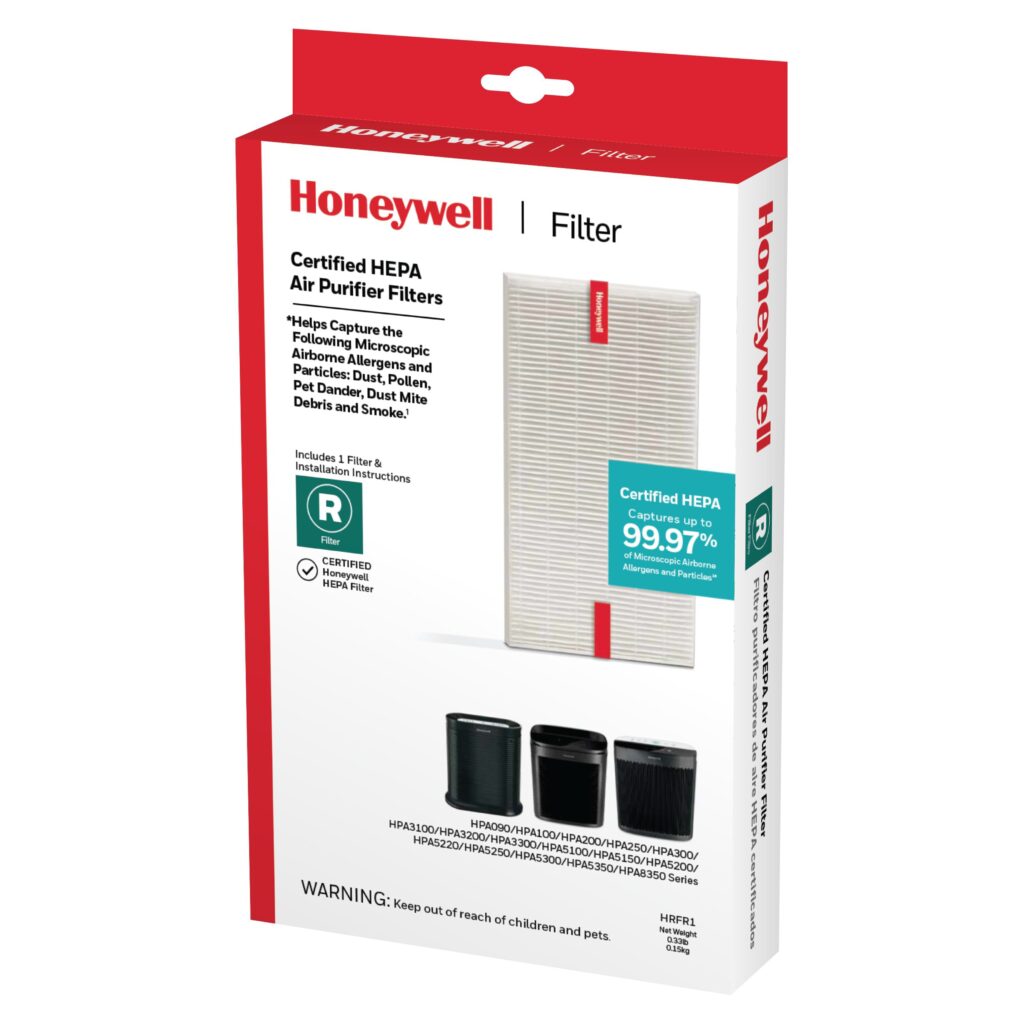
HEPA (High-Efficiency Particulate Air) filters are the most effective technology for removing particulate matter from indoor air. By definition, true HEPA filters remove at least 99.97% of particles that are 0.3 microns or larger, including dust, pollen, mold spores, and bacteria.
Research published in the National Institutes of Health shows that portable HEPA air cleaners can reduce indoor PM2.5 levels by 50-60% in real-world conditions. Some studies have shown reductions of up to 73% depending on room size and purifier capacity.
What HEPA filters DON’T remove: Gases and VOCs. HEPA filters are mechanical filters that trap particles, but they can’t capture gaseous pollutants like formaldehyde or benzene. For that, you need activated carbon.
Activated Carbon Filters: Essential for VOC Removal
Activated carbon (also called activated charcoal) is a porous material that adsorbs gases and odors. It’s absolutely essential if you’re concerned about VOCs, which you should be.
Studies have shown that activated carbon filters can reduce formaldehyde levels by 50% within just 15 minutes, and can bring levels near zero with continued use.
Important note: Activated carbon filters need to be replaced regularly—typically every 3 months. Once the carbon becomes saturated, it stops working effectively. Don’t cheap out on filter replacements.
The Best Air Purifiers for Biohackers
Based on my research and testing, here are my top recommendations for air purifiers that combine HEPA and activated carbon filtration:
Best Overall: Levoit Core 400S

The Levoit Core 400S is my top pick for most people. It covers large rooms up to 1,733 square feet, features both true HEPA and activated carbon filtration, and includes smart features like air quality monitoring and auto mode.
Key features:
- True HEPA H13 filter removes 99.97% of particles
- Activated carbon filter for VOC removal
- Real-time air quality display
- Smart WiFi connectivity for remote control
- Washable pre-filter extends filter life
- Quiet operation (24-50 dB)
Amazon Link: Levoit Core 400S on Amazon
Best Value: Coway Airmega AP-1512HH Mighty

The Coway Airmega AP-1512HH is a highly-rated, affordable option that doesn’t compromise on performance. It covers rooms up to 874 square feet and has been independently tested and proven effective.
Key features:
- HyperCaptive filtration system (pre-filter, deodorization filter, true HEPA)
- Air quality indicator with LED display
- Eco mode automatically adjusts fan speed
- Timer function
- Filter replacement indicators
Amazon Link: Coway Airmega AP-1512HH on Amazon
Best for Bedrooms: Levoit Vital 200S

For optimizing your sleep environment, the Levoit Vital 200S is perfect. It’s quieter than the Core 400S, covers rooms up to 1,073 square feet, and has a sleep mode that dims all lights.
Amazon Link: Levoit Vital 200S on Amazon
Nature’s Air Purifiers: The Truth About Plants
You’ve probably heard about the famous NASA Clean Air Study that showed houseplants can remove pollutants from indoor air. It’s true—but there’s important context you need to know.
The NASA Clean Air Study from 1989 tested various houseplants’ ability to remove benzene, formaldehyde, and trichloroethylene from sealed chambers. The results were impressive, but here’s the catch: the study used 10 to 1,000 plants per square meter in completely sealed environments.
In real-world home conditions, you’d need an impractical number of plants to achieve the same level of air purification. A 2014 review noted that “the effect of plants on indoor air in complex environments like offices requires further investigations to clarify the full capacity of plants in real-life settings.”
That said, plants still offer benefits:
- They increase humidity, which can be helpful in dry climates
- They improve psychological well-being and reduce stress
- They do remove some pollutants, just not at the rate you’d need to replace mechanical air purification
- The soil microorganisms also contribute to air purification
Think of plants as a complement to mechanical air purification, not a replacement. Here are the most effective air-purifying plants based on the NASA study:
Top 5 Air-Purifying Plants
1. Bamboo Palm (Chamaedorea seifrizii)
- Removes: Formaldehyde, benzene, trichloroethylene, xylene
- Highest formaldehyde removal rate in NASA study
- Adds humidity to dry indoor air
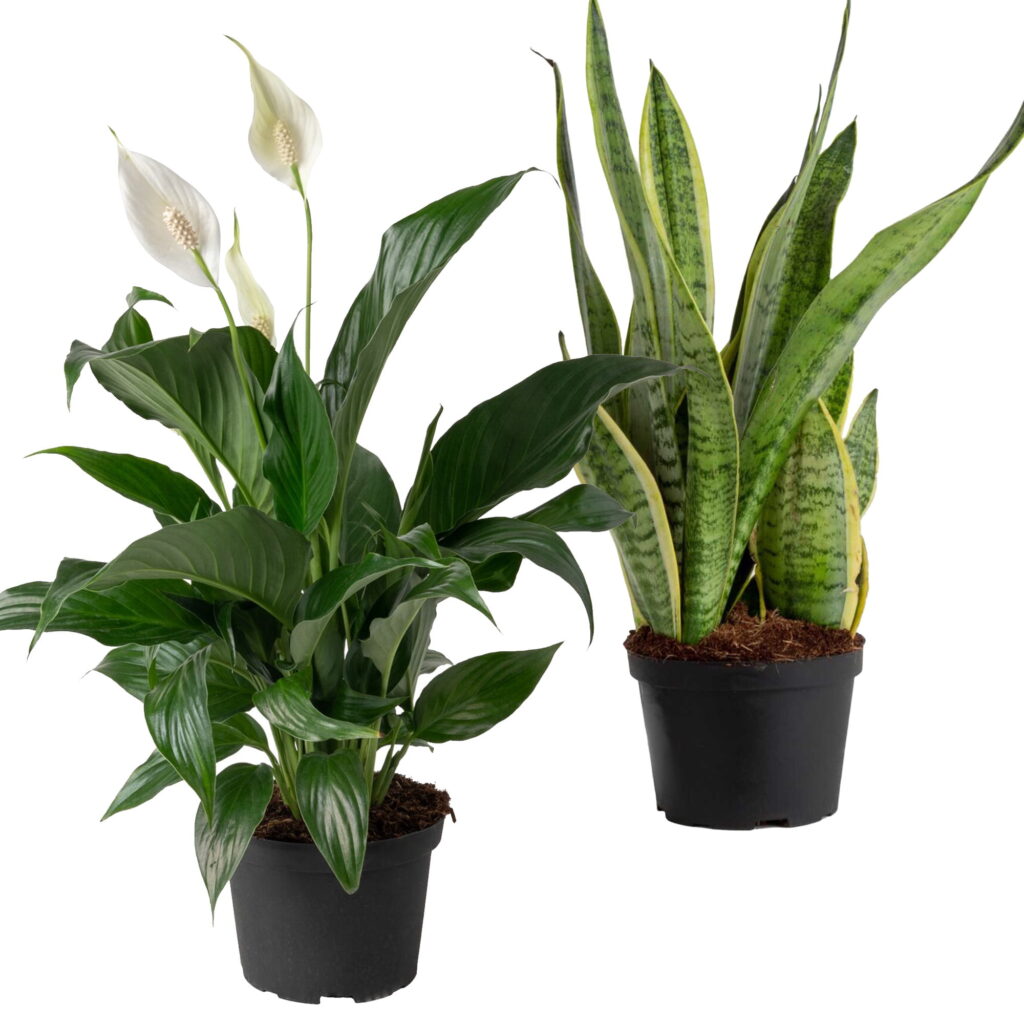
2. Peace Lily (Spathiphyllum)
- Removes: Ammonia, benzene, formaldehyde, trichloroethylene
- One of the few plants that removes ammonia
- Thrives in low light conditions
3. Snake Plant / Mother-in-Law’s Tongue (Sansevieria trifasciata)
- Removes: Formaldehyde, benzene
- Releases oxygen at night (unlike most plants)
- Extremely low maintenance
4. Boston Fern (Nephrolepis exaltata)
- Removes: Formaldehyde
- Excellent natural humidifier
- Prefers indirect light and high humidity
5. English Ivy (Hedera helix)
- Removes: Benzene, formaldehyde, trichloroethylene, xylene
- Easy to grow
- Can be toxic to pets if ingested
Amazon Link: Peace Lily and Snake Plant Combo on Amazon
Humidity Control: The Overlooked Air Quality Factor
Humidity plays a crucial role in indoor air quality, yet it’s often overlooked. Both too much and too little humidity can cause problems.
The optimal range is 30-50% relative humidity. The EPA recommends keeping humidity below 60% to prevent mold growth, but ideally you want to stay in that 30-50% sweet spot.
Why Humidity Matters
Too high (above 60%):
- Promotes mold and dust mite growth
- Increases off-gassing of VOCs from building materials
- Creates a breeding ground for bacteria
- Makes your home feel stuffy and uncomfortable
Too low (below 30%):
- Dries out your respiratory passages, making you more susceptible to infections
- Causes dry skin and irritated eyes
- Increases static electricity
- Can damage wood furniture and flooring
How to Control Humidity
In humid climates or during summer:
- Use a dehumidifier to maintain optimal levels
- Run exhaust fans during and after showers
- Fix any water leaks immediately
- Ensure your clothes dryer vents outside
- Use air conditioning, which naturally dehumidifies
In dry climates or during winter:
- Use a humidifier (but clean it regularly to prevent mold growth)
- Place bowls of water near heat sources
- Air-dry laundry indoors
- Keep bathroom doors open after showers to distribute moisture
Monitor with a hygrometer:

I recommend getting a simple digital hygrometer to monitor humidity levels. The ThermoPro TP50 is affordable, accurate, and easy to read.
Amazon Link: ThermoPro Digital Hygrometer on Amazon
Monitor and Optimize: You Can’t Improve What You Don’t Measure
This is a fundamental principle of biohacking: measurement drives improvement. You wouldn’t try to optimize your nutrition without tracking what you eat, and you shouldn’t try to optimize air quality without measuring it.
Key Metrics to Track
A comprehensive air quality monitor should track:
- PM2.5 and PM10 (particulate matter)
- CO2 levels (indicator of ventilation adequacy)
- TVOCs (total volatile organic compounds)
- Temperature and humidity
- NO2 (nitrogen dioxide from combustion)
Recommended Air Quality Monitor

The AirGradient ONE is my top recommendation for serious biohackers. It measures all the key pollutants, is fully open-source, and can integrate with home automation systems like Home Assistant.
Key features:
- Measures PM2.5, CO2, TVOCs, NO2, temperature, and humidity
- Real-time display with color-coded air quality indicators
- Open-source firmware (you own your data)
- Can send data to your own server or cloud platform
- Highly accurate sensors
Website: AirGradient ONE
For a more budget-friendly option, the Temtop M2000 Air Quality Monitor measures PM2.5, PM10, formaldehyde, and VOCs.
Amazon Link: Temtop M2000 on Amazon
Circadian Rhythm and Lighting: The Air Quality Connection
Here’s something most people don’t realize: your circadian rhythm and sleep quality are intimately connected to your indoor environment—and that includes air quality.
Poor air quality can disrupt sleep in several ways:
- Increased CO2 levels in bedrooms with poor ventilation can reduce sleep quality and cognitive function the next day
- Allergens and irritants cause nasal congestion and breathing difficulties
- Dry air irritates respiratory passages and causes snoring
- Mold exposure has been linked to sleep disturbances
But there’s another environmental factor that works synergistically with air quality: lighting.
Research published in Nature shows that home lighting significantly affects sleep and the circadian system. Evening exposure to bright light (especially blue light) delays your circadian rhythm and worsens sleep quality.
Optimize your environment for better sleep:
- Use air purifiers in bedrooms to ensure clean air throughout the night
- Maintain optimal humidity (40-50% is ideal for sleep)
- Dim lights 2-3 hours before bedtime
- Use warm-colored, low-intensity lighting in the evening
- Get bright light exposure in the morning to reinforce your circadian rhythm
- Keep bedroom temperature cool (65-68°F / 18-20°C)
This is environmental biohacking at its finest—optimizing multiple variables simultaneously for maximum impact on your health and performance.
Your 30-Day Indoor Air Quality Transformation
Ready to take action? Here’s a practical, week-by-week plan to transform your indoor air quality.
Week 1: Assess and Measure
Day 1-3:
- Order an air quality monitor (AirGradient ONE or Temtop M2000)
- Get a hygrometer to measure humidity
- Walk through your home and identify potential pollution sources (gas stoves, pressed wood furniture, cleaning products, areas with poor ventilation)
Day 4-7:
- Set up your air quality monitor and track baseline measurements
- Note patterns: when do pollutant levels spike? (cooking times, after cleaning, overnight in bedrooms?)
- Test humidity levels in different rooms
- Document any symptoms you experience (headaches, fatigue, allergies) and see if they correlate with air quality data
Week 2: Source Control
Day 8-10:
- Replace conventional cleaning products with low-VOC or natural alternatives
- Check all gas appliances for proper ventilation
- Inspect your home for water leaks or signs of mold
- Remove or relocate major VOC sources if possible
Day 11-14:
- Deep clean to remove accumulated dust and allergens
- Vacuum with a HEPA-filter vacuum
- Wash bedding, curtains, and other fabrics
- Clean or replace HVAC filters
- Establish a regular cleaning routine to prevent dust buildup
Week 3: Ventilation and Purification
Day 15-17:
- Order your air purifier (Levoit Core 400S, Coway Mighty, or Levoit Vital 200S)
- Establish a ventilation routine: open windows for 10-15 minutes daily (when outdoor air quality is good)
- Start using exhaust fans consistently during cooking and showers
Day 18-21:
- Set up your air purifier in the bedroom first (you spend 1/3 of your life there)
- Run it on auto mode and monitor the air quality improvements
- Add 2-3 air-purifying plants to your home
- If needed, get a humidifier or dehumidifier to maintain 30-50% humidity
Week 4: Monitor and Adjust
Day 22-25:
- Review your air quality data from the past 3 weeks
- Identify remaining problem areas or times
- Adjust purifier placement or add a second unit if needed
- Fine-tune your ventilation strategy based on data
Day 26-30:
- Establish a maintenance routine:
- Check air purifier filters monthly
- Replace activated carbon filters every 3 months
- Replace HEPA filters every 6-12 months (check manufacturer recommendations)
- Clean or replace HVAC filters every 1-3 months
- Monitor air quality weekly and adjust as needed
- Note improvements in how you feel: better sleep, fewer headaches, improved focus?
The Bottom Line: Breathe Better, Live Better
Indoor air quality is one of the most impactful yet overlooked aspects of health optimization. You can have the perfect diet, the best workout routine, and all the right supplements, but if you’re breathing polluted air for 90% of your day, you’re undermining all those efforts.
The good news? Unlike many aspects of health, indoor air quality is something you have direct control over. You don’t need to wait for policy changes or move to a different city. You can start making improvements today.
The three pillars—source control, ventilation, and air purification—work synergistically. You don’t need to implement everything at once. Start with the strategies that make the most sense for your situation and budget. Even small improvements can have a noticeable impact on how you feel and perform.
Remember, biohacking isn’t about perfection. It’s about continuous improvement and optimization. Measure your air quality, implement changes, and track the results. Your lungs—and your entire body—will thank you.
Related Articles on FitOnear
- The Power of Light: Biohacking Your Environment for Enhanced Energy and Performance
- Red Light Therapy at Home: Your Complete Guide to Benefits, Devices & Protocols
- The Ultimate Guide to Hacking Your Circadian Rhythm for Optimal Sleep & Energy
- Sleep Tracking for the Modern Biohacker: Oura Ring vs. Whoop vs. Apple Watch
Have you implemented any of these indoor air quality strategies? What improvements have you noticed? Share your experience in the comments below!
Disclaimer: This article contains Amazon affiliate links. As an Amazon Associate, we earn from qualifying purchases at no additional cost to you. All product recommendations are based on research and genuine assessment of value for biohackers.
Home office air: our quick picks
- Amazon Smart Air Quality Monitor: budget monitor that works with Alexa
- Aranet4: accurate CO2 monitor, great for a home office
- Levoit Core 300: compact HEPA purifier for a small office
- Coway Airmega AP-1512HH: bigger rooms, auto mode