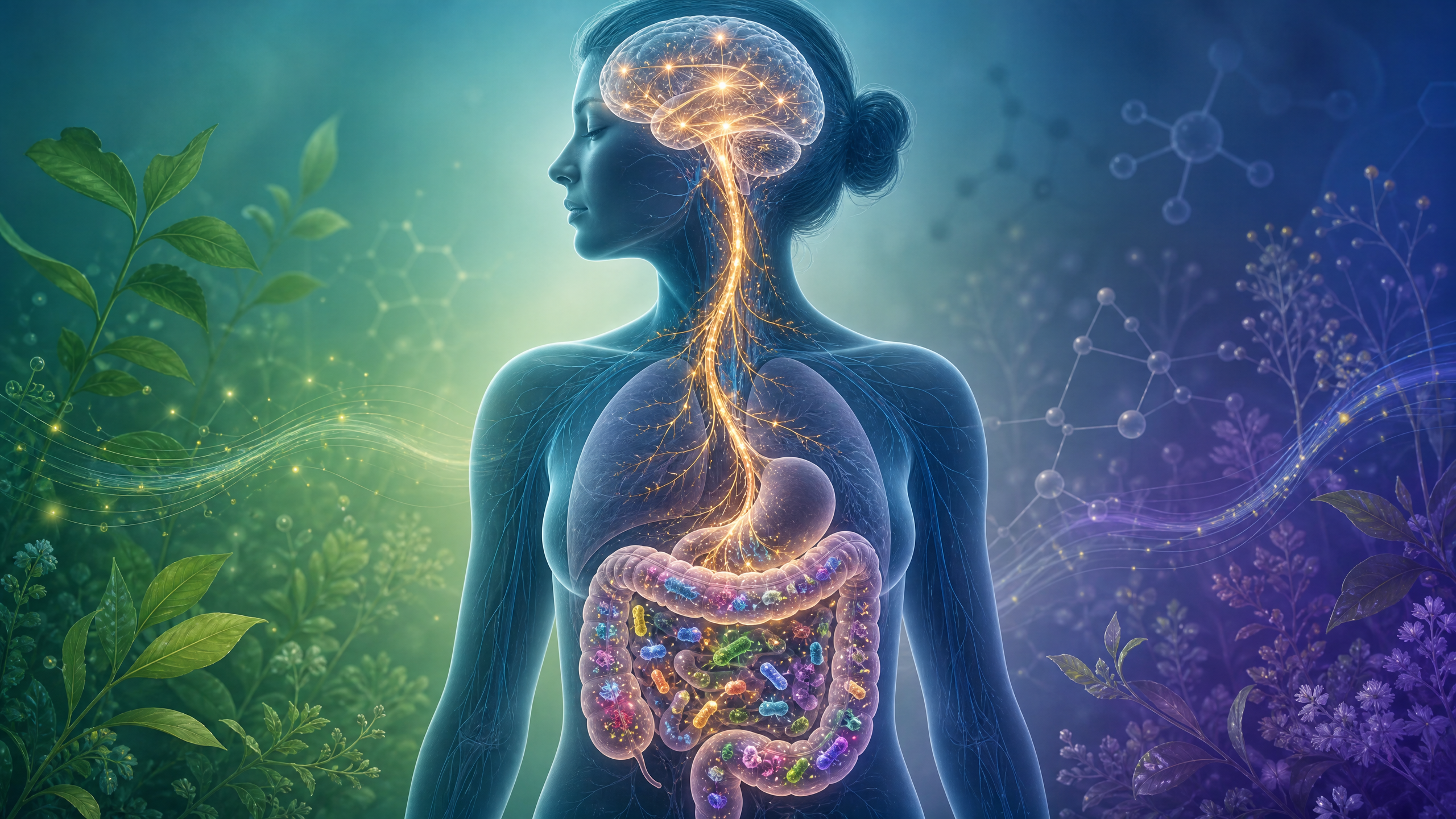
Do you ever get that uneasy feeling in your stomach when you’re stressed? Or find that digestive issues seem to worsen your mood? It’s not just in your head – or your gut. There’s a profound, two-way conversation happening constantly between your brain and your digestive system, a superhighway known as the Gut-Brain Axis.
For too long, anxiety and mood disorders have been treated as purely brain-based issues. But emerging science is revealing that the health of your gut plays a surprisingly powerful role in your mental well-being. If your gut is out of balance, your brain often feels the repercussions, manifesting as anxiety, brain fog, and even low mood.
The exciting news? You can actively biohack this connection. By optimizing your gut health, you can send calming signals to your brain, reducing anxiety and fostering a greater sense of peace. Let’s explore this fascinating link and how you can leverage it.
Understanding the Gut-Brain Axis: Your Body’s Second Brain
The Gut-Brain Axis is a complex communication network that links your central nervous system (brain and spinal cord) with your enteric nervous system (ENS), which governs your gastrointestinal tract. This connection involves several key players:
- The Vagus Nerve: This is the primary communication pathway, a long cranial nerve that acts like a direct telephone line between your brain and your gut. It transmits signals in both directions, influencing everything from digestion to mood. [1]
- Neurotransmitters: Your gut produces a vast array of neurotransmitters, including over 90% of the body’s serotonin – a key mood-regulating chemical. These chemicals can travel to the brain or influence nerve signals. [2]
- The Gut Microbiome: This is the bustling community of trillions of bacteria, fungi, and other microorganisms living in your intestines. These microbes produce various compounds, including short-chain fatty acids (SCFAs) and other metabolites, that can directly influence brain function, inflammation, and stress responses. [3]
Essentially, your gut isn’t just for digesting food; it’s a powerful endocrine organ and a crucial modulator of your mental health.
The Problem: How a Dysfunctional Gut Fuels Anxiety
When the delicate balance of your gut microbiome is disrupted, or your gut lining becomes compromised, it can send distress signals up the gut-brain axis, contributing to anxiety and other mood issues:
- Dysbiosis: An imbalance of beneficial vs. harmful gut bacteria can lead to increased inflammation and altered neurotransmitter production, impacting brain chemistry. [4]
- Gut Inflammation: Chronic inflammation in the gut can trigger systemic inflammation, which has been strongly linked to depression and anxiety. [5]
- Leaky Gut (Increased Intestinal Permeability): When the gut lining becomes porous, undigested food particles and toxins can enter the bloodstream, triggering immune responses and inflammation that affect the brain. [6]
- Reduced Neurotransmitter Production: A compromised microbiome may produce fewer beneficial neurotransmitters like serotonin and GABA (a calming neurotransmitter), leading to an anxious state.
If you’re experiencing digestive discomfort alongside anxiety, it’s a strong indicator that your gut might be contributing to your mental state.
Biohacking Your Gut-Brain Axis: Cultivating Calm from Within
The good news is that by strategically nurturing your gut, you can significantly impact your brain health and reduce anxiety. Here are some powerful biohacking strategies:
1. Psychobiotics: Targeted Probiotics for Your Mind
Not all probiotics are created equal. Psychobiotics are specific strains of beneficial bacteria that have been shown to exert positive effects on mental health, including reducing anxiety and improving mood. [7]
- How they help: These strains can produce neurotransmitters, reduce inflammation, and strengthen the gut barrier, all of which send calming signals to the brain.
- Specific Strains to Look For: Lactobacillus helveticus R0052 and Bifidobacterium longum R0175 are two well-researched strains for anxiety reduction.
- Recommended Product: Garden of Life Mood+ Probiotics (Look for products containing these specific strains or a blend targeting mood).
2. Embrace Fermented Foods: Ancient Wisdom for Modern Guts
Incorporating a variety of fermented foods into your diet is a delicious way to introduce diverse beneficial bacteria to your gut. These foods are rich in probiotics and prebiotics (food for your good bacteria).
- Examples: Kimchi, sauerkraut, kefir, kombucha, and unsweetened yogurt. Start slowly to allow your gut to adjust.
- How they help: They enhance microbial diversity, produce beneficial SCFAs, and can improve nutrient absorption, all supporting a healthier gut-brain connection.
3. Vagus Nerve Stimulation: Direct Communication with Your Calm Center
Stimulating your vagus nerve can directly influence its tone, promoting a more relaxed state. A higher vagal tone is associated with better stress resilience and reduced anxiety. [8]
- Techniques:
- Deep, Slow Breathing: Practice diaphragmatic breathing (belly breathing) for 5-10 minutes daily.
- Cold Water Gargling: Gargling with cold water for 30-60 seconds can activate the vagus nerve.
- Deep Humming/Chanting: The vibrations from humming can stimulate the vagus nerve.
- Cold Showers/Plunges: Brief exposure to cold water can also activate the vagus nerve and improve stress response.
4. Optimize Your Diet: Feed Your Gut, Feed Your Mind
What you eat profoundly impacts your gut microbiome and, consequently, your brain. Focus on a whole-foods, nutrient-dense diet:
- High Fiber: Found in fruits, vegetables, legumes, and whole grains. Fiber acts as a prebiotic, feeding your beneficial gut bacteria.
- Omega-3 Fatty Acids: Found in fatty fish (salmon, mackerel), flaxseeds, and walnuts. Omega-3s are powerful anti-inflammatory agents that support brain health. [9]
- Avoid Gut Irritants: Reduce or eliminate processed foods, excessive sugar, artificial sweeteners, and industrial seed oils, which can fuel inflammation and dysbiosis.
- Internal Link: Nutritional Biohacking & Gut Health: The Ketogenic Diet (While ketogenic, this article emphasizes gut-friendly principles).
Actionable Steps for a Calmer Mind and Healthier Gut
Ready to start biohacking your gut-brain axis? Here’s a quick checklist:
| Strategy | Actionable Step | Frequency |
|---|---|---|
| Probiotics | Take a psychobiotic supplement | Daily |
| Diet | Incorporate fermented foods | Daily |
| Vagus Nerve | Practice deep breathing/gargling | Daily |
| Nutrition | Focus on high-fiber, whole foods | Daily |
| Avoid | Processed foods, excess sugar | Consistently |
When to Seek Professional Guidance
While these biohacking strategies can be incredibly effective, it’s important to remember that severe or persistent anxiety can be a complex issue. If your anxiety is debilitating, interferes with your daily life, or doesn’t improve with lifestyle changes, please consult with a healthcare professional. A doctor or mental health specialist can provide a proper diagnosis and recommend appropriate treatment, which may include therapy, medication, or further diagnostic testing.
Conclusion: Your Gut is Your Ally in the Fight Against Anxiety
The Gut-Brain Axis is a testament to the incredible interconnectedness of your body. By understanding and actively nurturing your gut health, you’re not just improving digestion; you’re directly influencing your mood, stress resilience, and overall mental well-being. Biohacking your gut is a powerful, holistic approach to finding calm in a chaotic world.
Start implementing these strategies today, and experience the profound shift that comes from a happy gut and a calmer mind. Your brain will thank your gut for it!
References
[1] Bonaz, B., Bazin, T., & Pellissier, S. (2018). The vagus nerve at the interface of the microbiota-gut-brain axis. Frontiers in Neuroscience, 12, 49. https://pubmed.ncbi.nlm.nih.gov/29487507/
[2] Yano, J. M., Yu, K., Donaldson, G. P., Shastri, G. G., Ann, P., Ma, L., … & Hsiao, E. Y. (2015). Indigenous bacteria from the gut microbiota regulate host serotonin biosynthesis. Cell, 161(2), 264-276. https://pubmed.ncbi.nlm.nih.gov/25860609/
[3] Cryan, J. F., & Dinan, T. G. (2012). Mind-altering microorganisms: the impact of the gut microbiota on brain and behaviour. Nature Reviews Neuroscience, 13(10), 701-712. https://pubmed.ncbi.nlm.nih.gov/22968153/
[4] Foster, J. A., & McVey Neufeld, K. A. (2013). Gut-brain axis: how the microbiome influences anxiety and depression. Trends in Neurosciences, 36(5), 305-312. https://pubmed.ncbi.nlm.nih.gov/23541106/
[5] Maes, M., Kubera, M., & Leunis, J. C. (2008). The gut-brain barrier in depression: the new therapeutic frontier. Expert Opinion on Therapeutic Targets, 12(6), 705-715. https://pubmed.ncbi.nlm.nih.gov/18494672/
[6] Obrenovich, M. E. (2018). Leaky gut, leaky brain? Microorganisms, 6(4), 107. https://pubmed.ncbi.nlm.nih.gov/30347892/
[7] Sarkar, A., Lehto, S. M., Harty, S., Dinan, T. G., Dunn, M. J., & Cryan, J. F. (2016). Psychobiotics and the microbiota-gut-brain axis: in the pursuit of happiness. Neurotherapeutics, 13(3), 574-585. https://pubmed.ncbi.nlm.nih.gov/27215119/
[8] Breit, S., Kupferberg, A., Rogler, G., & Hasler, G. (2018). Vagus nerve as modulator of the brain–gut axis in psychiatric and inflammatory disorders. Frontiers in Psychiatry, 9, 44. https://pubmed.ncbi.nlm.nih.gov/29593576/
[9] Kiecolt-Glaser, J. K., Belury, M. A., Andridge, R., Malarkey, W. B., & Glaser, R. (2011). Omega-3 supplementation lowers inflammation and anxiety in medical students: a randomized controlled trial. Brain, Behavior, and Immunity, 25(8), 1725-1734. https://pubmed.ncbi.nlm.nih.gov/21784145/