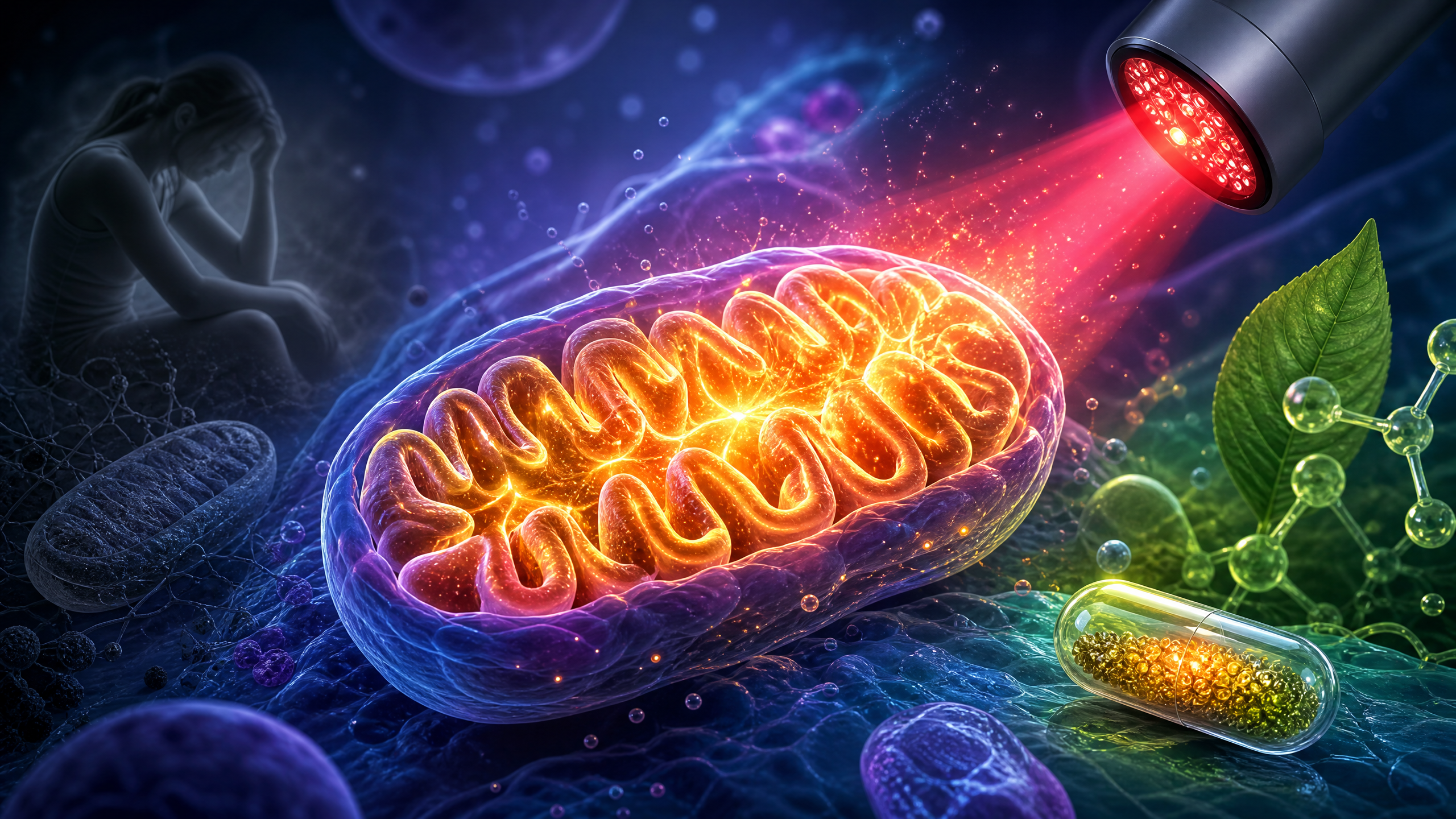
Ever feel like you’re constantly running on empty, even after a full night’s sleep? You’re not alone. Millions experience persistent fatigue that goes beyond just being tired. It’s a deep, pervasive exhaustion that can make daily tasks feel monumental. While many factors contribute to this, one often-overlooked culprit lies deep within your cells: your mitochondria.
Think of your body as a bustling city, and your mitochondria are the tiny, powerhouse generators in every single cell. They’re responsible for creating over 90% of the energy your body needs to function, from thinking and moving to healing and breathing. When these microscopic power plants aren’t running efficiently, you experience what we call the “Mitochondrial Power Gap” – a deficit in cellular energy that manifests as chronic fatigue, brain fog, and a general lack of vitality.
But here’s the exciting part: you can actually biohack your mitochondria to boost their performance and reclaim your lost energy. Let’s dive into how.
What Exactly Are Mitochondria? The Cell’s Unsung Heroes
Before we talk about fixing them, let’s understand what these incredible organelles do. Mitochondria are often called the “powerhouses of the cell” because their primary job is to convert the food you eat and the oxygen you breathe into adenosine triphosphate (ATP), the main energy currency of your body. [1]
Every cell in your body, except red blood cells, contains mitochondria. Cells with high energy demands, like those in your brain, heart, and muscles, have thousands of them! When your mitochondria are healthy and abundant, your body hums with energy. When they’re struggling, so are you.
The “Power Gap”: Why Your Mitochondria Might Be Failing You
So, what causes these vital energy factories to underperform? Several modern lifestyle factors can create this “power gap”:
- Chronic Stress: Constant stress floods your body with cortisol, which can damage mitochondria and impair their function over time. [2]
- Poor Diet: A diet high in processed foods, sugar, and unhealthy fats leads to inflammation and oxidative stress, both of which are detrimental to mitochondrial health. [3]
- Lack of Exercise: Physical activity, especially intense exercise, signals your body to create more mitochondria and improve their efficiency. A sedentary lifestyle does the opposite.
- Environmental Toxins: Exposure to pollutants, heavy metals, and certain chemicals can directly harm mitochondrial structure and function. [4]
- Sleep Deprivation: Your mitochondria repair and regenerate during sleep. Chronic lack of sleep robs them of this crucial recovery time.
When your mitochondria are compromised, you don’t just feel tired; you might also experience brain fog, muscle weakness, slow recovery from exercise, and even a weakened immune system. It’s a systemic issue that impacts your entire well-being.
Biohacking Your Mitochondria: Unlocking Your Hidden Energy
The good news is that you have significant control over your mitochondrial health. By implementing targeted biohacking strategies, you can optimize these cellular power plants and bridge that energy gap.
1. Smart Supplementation: Fueling the Factories
Certain nutrients are critical cofactors for mitochondrial function. Supplementing with these can provide the raw materials your cells need to produce energy efficiently.
- Coenzyme Q10 (CoQ10): This powerful antioxidant is essential for the electron transport chain, a key step in ATP production. Levels naturally decline with age. [5]
- Why it helps: Improves energy production and protects mitochondria from oxidative damage.
- Recommended Product: Pure Encapsulations – CoQ10
- Pyrroloquinoline Quinone (PQQ): Often called a “longevity vitamin,” PQQ not only protects existing mitochondria but also stimulates the growth of new ones (a process called mitochondrial biogenesis). [6]
- Why it helps: Boosts both the quality and quantity of your cellular power plants.
- Recommended Product: Life Extension – PQQ Caps
- Magnesium: As we discussed in our previous post on internal vibrations, magnesium is a crucial mineral involved in over 300 enzymatic reactions, many of which are vital for ATP synthesis. [7]
- Why it helps: Directly supports energy production and nerve function.
- Internal Link: The Biohacker’s Guide To Essential Supplements
2. High-Intensity Interval Training (HIIT): The Mitochondrial Workout
Forget long, slow cardio if you want to optimize mitochondria. HIIT, which involves short bursts of intense exercise followed by brief recovery periods, is a potent stimulus for mitochondrial growth and efficiency. [8]
- How it works: HIIT creates a demand for rapid energy, forcing your cells to adapt by producing more and better-functioning mitochondria. It’s like giving your power generators a challenging upgrade.
- Practical Tip: Start with 15-20 minute sessions, 2-3 times a week. Think sprints, burpees, or cycling with alternating high and low intensity.
3. Red Light Therapy (Photobiomodulation): Cellular Recharge
Red and near-infrared light therapy, also known as photobiomodulation, is a cutting-edge biohack that directly targets mitochondria. [9]
- How it works: Specific wavelengths of red and near-infrared light penetrate your skin and are absorbed by chromophores within your mitochondria. This stimulates ATP production, reduces oxidative stress, and enhances cellular repair.
- Why it helps: Can significantly reduce fatigue, improve muscle recovery, and boost overall cellular health.
- Recommended Product: Hooga Red Light Therapy Panel
4. Cold Exposure: Shocking Your Cells into Action
Deliberate cold exposure, whether through cold showers, ice baths, or cryotherapy, is a powerful hormetic stressor. Hormesis is the concept where a small, beneficial stressor triggers a positive adaptive response in the body. [10]
- How it works: Cold exposure activates brown adipose tissue (BAT), which is rich in mitochondria, and stimulates mitochondrial biogenesis. It also improves metabolic flexibility and reduces inflammation.
- Practical Tip: Start with 30-second cold showers and gradually increase duration and decrease temperature. Even a few minutes a day can make a difference.
Actionable Steps for Boosting Mitochondrial Health
Ready to reclaim your energy? Here’s a quick checklist to get started:
| Strategy | Actionable Step | Frequency |
|---|---|---|
| Supplementation | Take CoQ10, PQQ, and Magnesium | Daily |
| Exercise | Incorporate 2-3 HIIT sessions | Weekly |
| Red Light Therapy | Use a red light device | 10-20 mins, 3-5x/week |
| Cold Exposure | Take cold showers or plunges | Daily |
| Diet | Focus on whole, unprocessed foods | Daily |
| Stress Management | Practice mindfulness or meditation | Daily |
| Sleep | Aim for 7-9 hours of quality sleep | Nightly |
When to Seek Professional Help
While biohacking offers incredible tools for optimizing your health, it’s crucial to remember that persistent, severe fatigue can sometimes be a symptom of an underlying medical condition. If your fatigue is debilitating, doesn’t improve with lifestyle changes, or is accompanied by other concerning symptoms, please consult with a healthcare professional. They can rule out conditions like thyroid disorders, anemia, autoimmune diseases, or chronic infections.
Conclusion: Power Up Your Life
Understanding and optimizing your mitochondrial health is one of the most profound biohacks you can implement for sustained energy, mental clarity, and overall well-being. By combining smart supplementation, strategic exercise, and innovative therapies like red light and cold exposure, you can move beyond just surviving and start thriving.
Don’t let the “Mitochondrial Power Gap” hold you back any longer. Start implementing these strategies today and feel the difference as your cellular power plants come back online!
References
[1] Friedman, J. R., & Nunnari, J. (2014). Mitochondrial form and function divide and conquer. Cell, 156(6), 1112-1119. https://pubmed.ncbi.nlm.nih.gov/24630716/
[2] Picard, M., McEwen, B. S., Epel, E. S., & Ghezzi, P. (2018). Stress, mitochondria, and the allostatic load on the brain. Neuroscience & Biobehavioral Reviews, 84, 187-201. https://pubmed.ncbi.nlm.nih.gov/28847746/
[3] Ma, D., & Li, Y. (2018). Diet and mitochondrial function: Focus on the role of nutrients and phytochemicals. Journal of Agricultural and Food Chemistry, 66(47), 12389-12400. https://pubmed.ncbi.nlm.nih.gov/30403197/
[4] Meyer, J. N., Leung, M. C., Rooney, J. P., Sendoel, A., Hengartner, M. O., Kissová, I., & Morrison, M. (2018). Mitochondria as a target of environmental toxicants. Toxicological Sciences, 162(1), 1-13. https://pubmed.ncbi.nlm.nih.gov/29088362/
[5] Saini, R. (2011). Coenzyme Q10: The essential nutrient. Journal of Pharmacy and Bioallied Sciences, 3(3), 466. https://pubmed.ncbi.nlm.nih.gov/21897727/
[6] Chowanadisai, W., Bauerly, K. A., Tchaparian, E., Wong, A., Cortopassi, G. A., & Rucker, R. B. (2010). Pyrroloquinoline quinone stimulates mitochondrial biogenesis by activating PGC-1α. The Journal of Biological Chemistry, 285(1), 142-152. https://pubmed.ncbi.nlm.nih.gov/19861415/
[7] Al Alawi, A. M., Majoni, S. W., & Falhammar, H. (2018). Magnesium and human health: Perspectives and research directions. International Journal of Endocrinology, 2018. https://pubmed.ncbi.nlm.nih.gov/30026844/
[8] Granata, C., Jamnick, N. A., & Bishop, D. J. (2016). Training-induced changes in mitochondrial content and respiratory function in human skeletal muscle. Sports Medicine, 46(7), 975-991. https://pubmed.ncbi.nlm.nih.gov/26896244/
[9] Hamblin, M. R. (2017). Mechanisms and applications of the anti-inflammatory effects of photobiomodulation. AIMS Biophysics, 4(3), 337. https://pubmed.ncbi.nlm.nih.gov/28740833/
[10] Mattson, M. P. (2008). Hormesis and neuroprotection. Ageing Research Reviews, 7(1), 40-49. https://pubmed.ncbi.nlm.nih.gov/17693125/