Affiliate disclosure: As an Amazon Associate I earn from qualifying purchases. Shopping buttons open Amazon.com searches; check the exact item and regional delivery before buying.
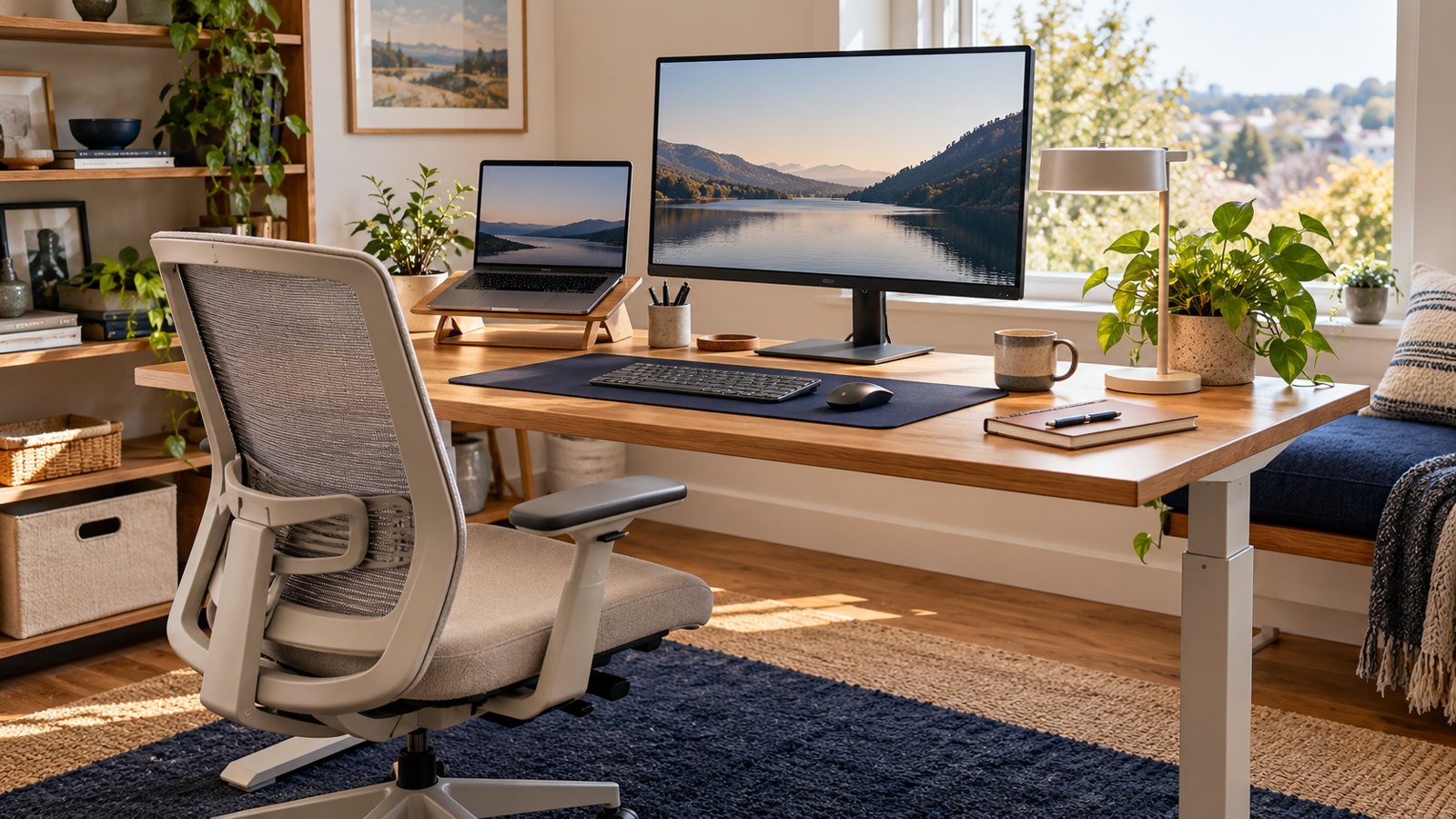
Prepared with AI assistance. Practical examples are illustrative, not hands-on test results. The featured image is an AI-generated editorial illustration of generic equipment, not an exact branded product photograph.
Quick answer: Prioritize a correctly sized work surface, adjustable screen height, supportive seating and vertical storage before buying decorative accessories.
A small office works when each item supports posture, access or focus and can be reset quickly at the end of the day.
What matters most
- Measure before buying
- Use vertical space
- Keep the work zone visually simple
- Protect movement and ventilation
A practical step-by-step approach
1. Measure the area
Record width, depth, outlets, doors and chair movement.
2. Set the ergonomic anchor
Set chair, keyboard and monitor positions before accessories.
3. Add vertical storage
Use shelves or wall organization without overcrowding the desk.
4. Control cables
Route power safely and keep frequently moved cables accessible.
5. Improve light and sound
Place the screen perpendicular to glare and add a focused task light.
Try it in practice
Measure the usable space
Measure the desk depth with the keyboard and mouse in place, not just the empty tabletop. Check chair movement, legroom, screen distance and where cables will run. Try the layout with existing equipment before buying a larger monitor or desk.
Illustrative exercise, not a measured test result.
What to check before you decide
Compare setups by footprint, adjustability, storage, cable path, lighting and ease of returning the room to normal use.
- Correct dimensions
- Adjustable posture
- Clear floor space
- Useful lighting
- Easy reset
Common mistakes to avoid
- Buying an oversized desk
- Using a laptop flat all day
- Blocking walkways
- Adding storage before reducing clutter
A question worth asking
What should I buy first?
Address the specific problem that disrupts work: poor support, unreadable display, cramped input space or unclear calls. A coordinated shopping list is not a substitute for a fit check.
Your next step
Design from posture and movement outward. A compact setup can feel generous when the work surface stays clear and every object earns its place.
Further reading
For additional guidance and context, consult OSHA: computer workstation guidance. Check how the guidance applies to your organisation, country and specific task.