Affiliate disclosure: As an Amazon Associate I earn from qualifying purchases. Shopping buttons open Amazon.com searches; check the exact item and regional delivery before buying.
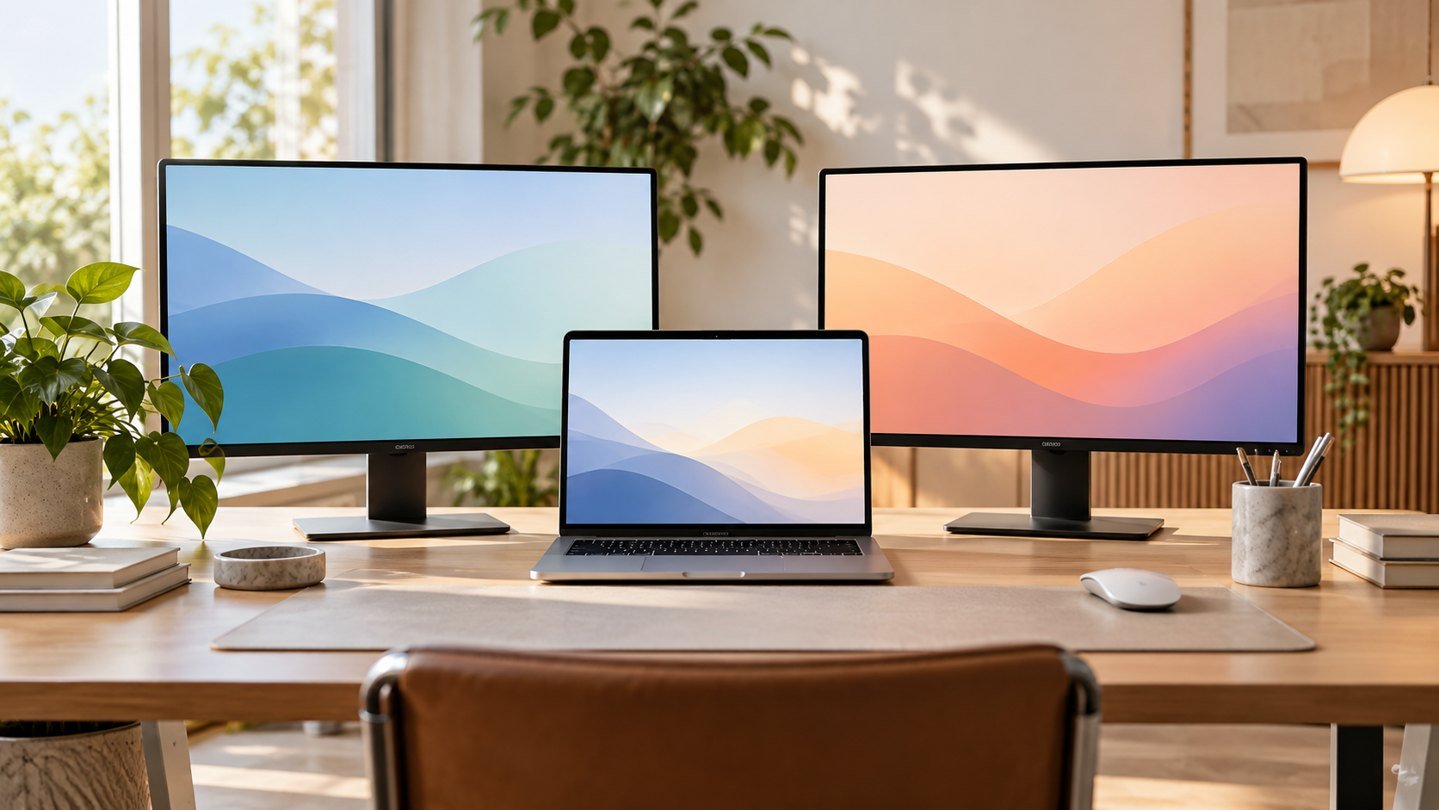
Prepared with AI assistance. Practical examples are illustrative, not hands-on test results. The featured image is an AI-generated editorial illustration of generic equipment, not an exact branded product photograph.
Quick answer: For most office work, a 27-inch 1440p IPS display with height adjustment and the right laptop connection offers the best balance of clarity and cost.
Refresh rate and dramatic specifications receive attention, but office comfort depends more on text clarity, physical positioning and reliable connectivity.
What matters most
- Match size to viewing distance
- Prioritize text clarity
- Check laptop charging needs
- Use an adjustable stand or arm
A practical step-by-step approach
1. Measure desk depth
Ensure the screen can sit roughly an arm’s length away.
2. Choose size and resolution
Balance workspace with readable scaling on your operating system.
3. Check panel and brightness
IPS is a dependable general choice; extreme brightness is rarely necessary indoors.
4. Confirm ports
Verify USB-C power delivery, HDMI or DisplayPort requirements.
5. Plan positioning
Position the top of the screen near eye level and control glare.
Try it in practice
Test readable text at your distance
Compare a normal spreadsheet, document and video call at the scaling you will actually use. Confirm the laptop’s supported outputs and the monitor’s input ports. Plan the stand footprint before deciding that a larger panel will improve your workspace.
Illustrative exercise, not a measured test result.
What to check before you decide
Compare monitors by pixel density, panel, stand adjustment, ports, power delivery, warranty and measured ergonomics.
- Readable text
- Correct size
- Laptop compatibility
- Height adjustment
- Solid warranty
Common mistakes to avoid
- Buying by diagonal size alone
- Ignoring stand height
- Assuming every USB-C port charges
- Using a large screen too close
A question worth asking
Does higher resolution always make work easier?
Only if text size, scaling, connection support and viewing distance work for you. Evaluate the real applications you use, not just a demonstration image.
Your next step
Choose the display that fits your desk and computer first. Good positioning and clear text create more daily value than specifications designed mainly for gaming.
Further reading
For additional guidance and context, consult OSHA: computer workstation guidance. Check how the guidance applies to your organisation, country and specific task.