Quick story · 5 cards · about 1 min
Brick or block?
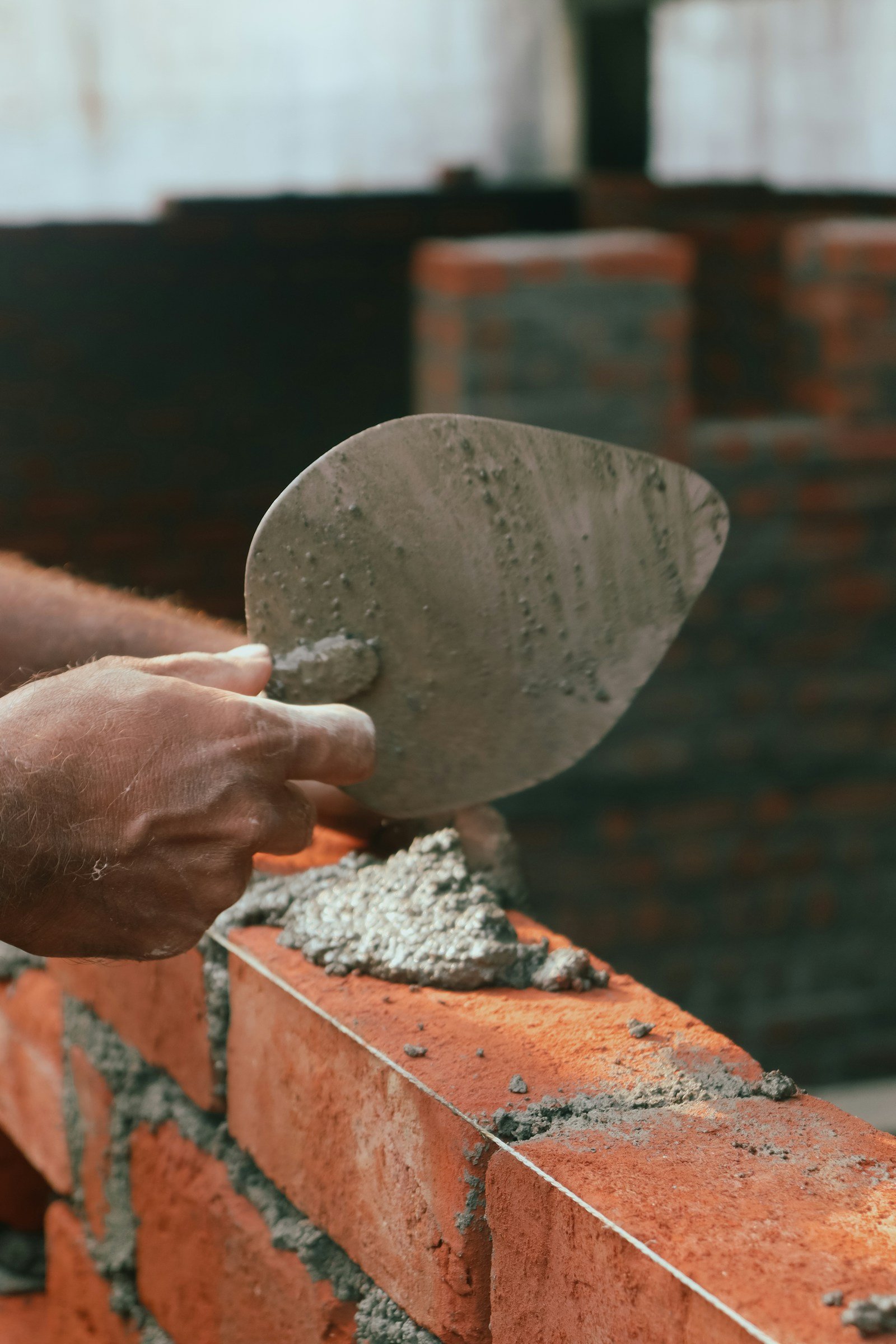
Two masonry materials, very different costs and finishes.
7 bricks ≈ 1 block
Block is usually cheaper and faster to lay.
Heavy, not warm
Both store heat well but insulate poorly on their own.
Brick's share
Brick is chosen for its finish; block is usually rendered.
Insulate either way
Pick by budget, finish and climate, then add insulation.
Next storyTypes of House Foundations: Slab, Crawl Space, Basement, Raft…Tap the sides or swipe to move · hold to pause · tap the half-circle icon to change the look
Clay brick and concrete block are both masonry: heavy, fire-resistant, insect-proof and long-lasting. The real differences are in cost, speed, how the wall is finished and how it handles moisture. Neither is a good insulator by itself, which surprises many people planning a “solid” house. Here’s how they compare, and how to choose.
Quick answer
Concrete block is usually cheaper and faster for structural walls: one block covers roughly the face area of seven bricks, and in a US price guide the block cost $1.25–$2.50 against about $2.45–$6.30 for seven bricks, before labour. Its hollow cores take steel reinforcement and insulation, but it’s porous, so it needs render or a coating. Clay brick costs more and takes longer to lay, but it gives a durable, low-maintenance finished face. Both have high thermal mass and low insulation value, so either wall needs added insulation to be comfortable and efficient.
Brick vs concrete block vs AAC: side by side
| Factor | Clay brick | Concrete block | AAC block |
|---|---|---|---|
| Material cost (same area) | Higher: ~7 bricks per block-sized area | Lower: one larger unit | Varies by market; check local prices |
| Thermal mass | High | High | Lower (much lighter) |
| Insulation on its own | Low; cavity wall R 0.59–0.71 | Low; cores can be filled with insulation | Significantly higher than standard block |
| Moisture | Durable; salts can cause fretting if damp isn’t managed | Porous; must be rendered, coated or clad | Needs a protective finish outside |
| Sound | Excellent, especially low-frequency noise | Good, thanks to its mass | Check the product’s acoustic data |
| Finish | Can be left exposed | Usually rendered or clad | Rendered or clad |
| Typical use | Facing walls, veneers, feature walls | Structural walls, foundations, retaining walls | Walls where insulation matters most |
Is brick or block cheaper?
Block, in most cases. A standard concrete block is much bigger than a brick, so one block covers about the face area of seven bricks. Angi’s US cost guide prices blocks at roughly $1.25–$2.50 each and bricks at $0.35–$0.90 each, which puts seven bricks at about $2.45–$6.30 for the same patch of wall. Fewer, larger units also mean fewer joints and faster laying, so labour usually favours block too.
The comparison changes once you add the finish. Block is normally rendered, clad or painted, while facing brick is the finish. If you were going to put a brick skin on a block house anyway, compare whole wall systems, not units.
Which keeps a house cooler or warmer?
Neither does much on its own. Brick and block both have high thermal mass: they soak up heat slowly and release it slowly, which can smooth out daily temperature swings. But they have low insulation value. Australia’s YourHome guide gives a whole cavity brick wall, two leaves with a 50 mm gap, a total R-value of only about 0.59–0.71 m²K/W. A modern insulated wall is typically several times that.
So the question isn’t brick or block; it’s where the insulation goes. Thermal mass works best inside the insulation, paired with shading and good ventilation. Used badly, for example a sun-baked wall with no shade, it can store heat and release it into bedrooms at night. If insulation is the priority, autoclaved aerated concrete (AAC) blocks are much lighter and insulate significantly better than standard block.
Durability and moisture
- Clay brick is extremely durable and low-maintenance, and old bricks can often be reclaimed. Its weak point is moisture carrying salts into the face, which can make bricks crumble (“fretting”). Good damp-proofing and drainage prevent it.
- Concrete block is porous and will wick moisture unless it’s rendered, coated or covered. Structural block has open cells, which cut weight and let builders add steel reinforcement and grout where the engineer needs it.
Four ways to build a masonry wall
- Brick veneer: a single brick skin outside a timber or steel frame. Economical and quick, with the roof going on early, but the bricks add little thermal benefit.
- Double brick: two brick leaves with a cavity that cuts heat transfer and stops rain getting through. Slower, because the inner leaf must be finished before the roof is framed.
- Reverse brick veneer: brick on the inside, an insulated frame on the outside, so the thermal mass sits within the insulation. Generally costs more.
- Rendered block: structural block, insulated in the cores or on the face, then rendered. Common for whole houses, boundary walls and retaining walls.
Exposed brick remains popular for character. See our warm brick exterior palettes, and FitOnear Original Home 01 for a brick courtyard house worked through in full. In the US, brick or brick veneer was the main exterior wall material on 16.8% of new single-family homes started in 2025, down from nearly a quarter in 2012.
How to choose
- Tight budget, rendered look: concrete block, with insulation planned from the start.
- Exposed masonry, long life, low upkeep: facing brick, as double brick or veneer.
- Insulation first: AAC block, or any masonry with continuous insulation.
- Hot climate: keep masonry shaded, insulate the sunny walls and roof, and let the house ventilate at night. Our courtyard house ideas show how plan and shade work with heavy walls.
WALLS ARE ONE LINE IN THE BUDGET
See how walls, roof and foundations fit into the whole cost of a house, then size your home with the free planner.
Frequently asked questions
Is it cheaper to build with brick or concrete block?
Concrete block is usually cheaper. One block covers about the same face area as seven bricks; a US cost guide prices blocks at $1.25–$2.50 each and bricks at $0.35–$0.90 each, so the same patch of wall costs about $2.45–$6.30 in bricks. Block is also faster to lay, but it normally needs render or cladding.
Is a brick house well insulated?
Not by itself. Brick has high thermal mass but low insulation value: a whole cavity brick wall has a total R-value of only about 0.59–0.71 m²K/W according to Australia’s YourHome guide. Brick and block walls both need added insulation.
Which is better for a hot climate, brick or block?
Both store heat. In a hot climate what matters more is shading the walls, insulating the sunny walls and the roof, and ventilating at night. AAC blocks insulate significantly better than standard concrete block if insulation is the priority.
Does concrete block need to be rendered?
Usually, yes. Concrete block is porous and can wick moisture, so it should be rendered, coated or covered on the outside.
What is an AAC block?
AAC stands for autoclaved aerated concrete. It is a special concrete block that is much lighter than normal concrete block and has significantly higher thermal resistance, so it insulates better.
Sources and standards
- Australian Government YourHome: Brickwork and blockwork (thermal mass, R-values, moisture, AAC, wall types)
- Angi: Concrete block vs brick (US unit prices, coverage)
- Lowe’s: Brick buying guide (structural block cells and reinforcement)
- NAHB Eye on Housing: Exterior material trends in single-family homes (Jul 2026) (brick share, 2025)
- NAHB Eye on Housing: Vinyl surpasses stucco (Oct 2025) (brick share trend since 2012)
Sources checked November 2026. Prices are US snapshots and differ by country and supplier. Structural walls must be designed to local codes. Read how we plan and check our guides.
Get the Pinterest pin & social images
Ready-made graphics for this article: Pinterest 1000 × 1500; Facebook/X 1200 × 630. Download an image and add your own caption, or use the share buttons to open a composer.