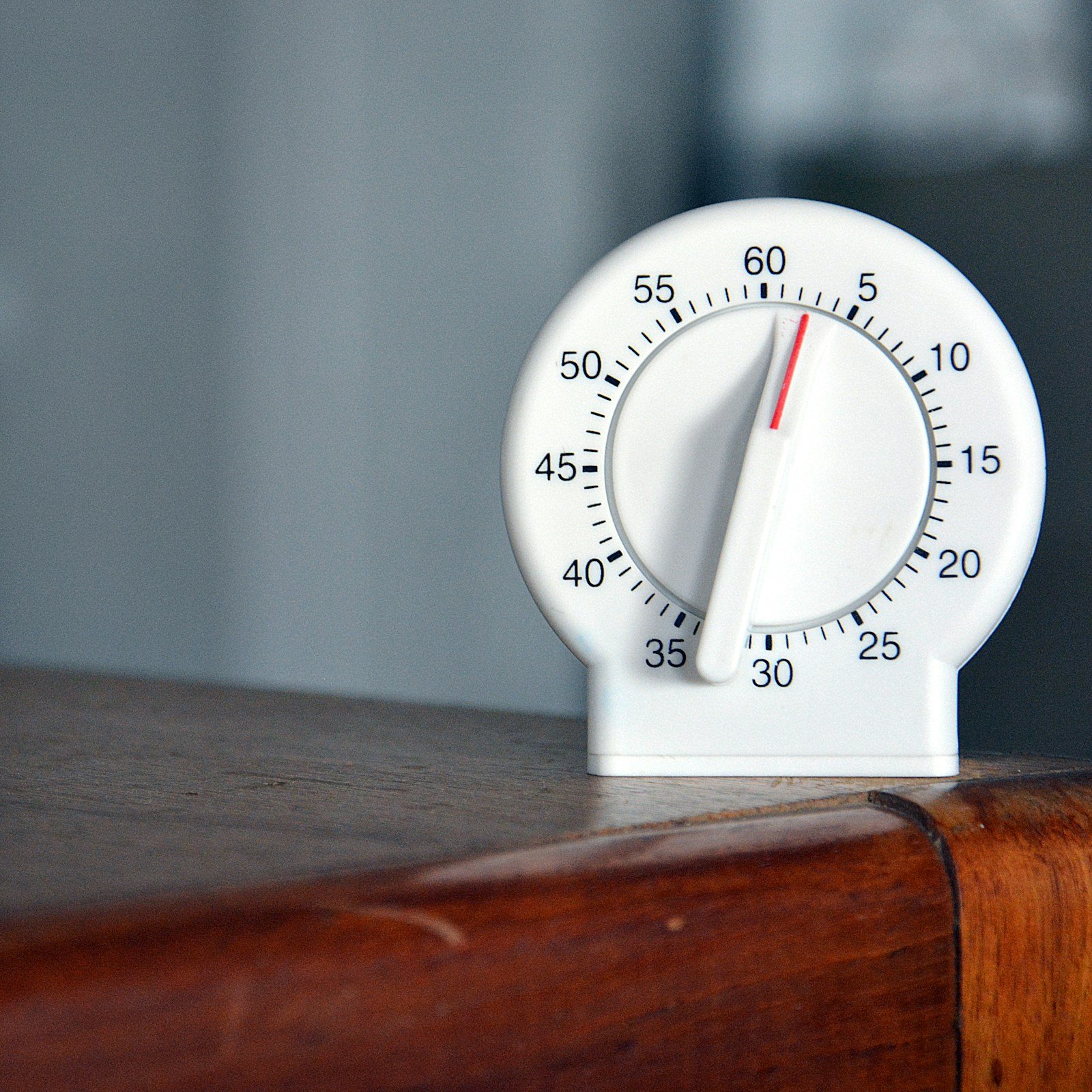
The Pomodoro Technique is the simplest focus method that actually works for most people: a timer, a single task and planned breaks. Francesco Cirillo developed it as a university student, using a tomato-shaped kitchen timer (pomodoro is Italian for tomato). Here’s how to do it properly, how to adapt it to modern knowledge work, and when a different system fits better.
How the Pomodoro Technique works
- Choose one task and write it down. Big projects become a list of smaller tasks you can start now.
- Set a timer for 25 minutes and work only on that task until it rings.
- Handle distractions without switching: if something pops into your head, jot it on a “later” list and keep going.
- Take a 5-minute break when the timer rings. Stand up and move away from the screen.
- Repeat. After four focus blocks, take a longer 15–30 minute break.
- Review: at the end of the day, note how many blocks each task really took. Your estimates will get much better within a week.
What the research says about breaks
The strongest evidence isn’t for the number 25; it’s for taking short breaks at all. A 2022 meta-analysis in PLOS ONE by Patricia Albulescu and colleagues pooled 22 studies on micro-breaks of 10 minutes or less. Breaks were linked to higher vigor and lower fatigue. The effect on performance overall wasn’t significant, but longer breaks tended to help more, especially for creative and clerical tasks. More demanding work may need longer breaks.
In practice: keep the structure, but adjust the lengths to your work.
Choose your interval
| Work type | Focus / break | Why |
|---|---|---|
| Email, admin, studying flashcards | 25 / 5 | Short tasks, frequent resets help energy |
| Writing, design, coding | 50 / 10 | Deep work needs longer warm-up; fewer interruptions |
| Very hard problems, long reading | 90 / 15–20 | Fits a longer attention cycle; take a real break after |
| Low energy or getting started | 15 / 5 | Lowers the barrier to begin; extend once you’re moving |
Want a fuller system around these blocks? Our deep work focus system and time blocking for unpredictable days pair well with Pomodoros.
Making Pomodoro work in a real job
- Meetings break the rhythm. Plan Pomodoros in the gaps; a 50-minute slot fits one long block or two short ones.
- Batch messages. Check email and chat in a break or a dedicated “admin Pomodoro”, not mid-block.
- Tell people. A status like “Focusing until 10:30” stops most interruptions. Our async work guide helps teams respect it.
- Don’t stop mid-flow. If you’re deep in something when the timer rings, finish the thought, then break. The timer serves you, not the other way round.
Common Pomodoro mistakes
Social feeds rarely end in 5 minutes. Move your body or look out a window instead.
“Work on report” stalls. “Draft section 2 intro” gets done.
After four blocks, fatigue builds. Take the 15–30 minutes.
Measure finished tasks, not timers started.
Best Pomodoro timer apps and tools
| Tool | Platform | Price | Best for |
|---|---|---|---|
| A kitchen or cube timer | Physical | Low cost | Staying off screens; the original method |
| TickTick | Phone, desktop, web | Free; Premium about $36/year | Tasks and a built-in Pomodoro timer in one app |
| Your phone’s built-in timer | Phone | Free | Zero setup |
| Focus or Do Not Disturb modes | Windows, macOS, iOS, Android | Free | Blocking notifications during blocks |
If you want your timer and to-do list in one place, see our to-do list app comparison.
When Pomodoro isn’t the right fit
- Constant interruptions are your job (support, on-call, reception): use short task batches and time blocks instead.
- You already get deep focus easily: a single long block with one break may suit you better.
- Creative flow: use the timer to start, then let it run longer.
Frequently asked questions
How does the Pomodoro Technique work?
Choose one task, work on it for 25 minutes without interruptions, take a 5-minute break, and after four focus blocks take a longer 15–30 minute break.
Does the Pomodoro Technique actually work?
Planned breaks are well supported: a 2022 meta-analysis of 22 studies found micro-breaks of up to 10 minutes raise energy and reduce fatigue. The exact 25-minute length is a starting point, not a rule.
Is 25 minutes the best Pomodoro length?
Not for everyone. Use 25/5 for admin and studying, 50/10 for writing or coding, and 90 minutes with a longer break for very demanding work.
What should I do during a Pomodoro break?
Stand up, stretch, drink water, walk or look into the distance. Avoid starting social media feeds or email threads you can’t finish in five minutes.
Who invented the Pomodoro Technique?
Francesco Cirillo, who developed it as a university student using a tomato-shaped kitchen timer. Pomodoro means tomato in Italian.
Build a full focus system
Pair Pomodoros with time blocking, a clean desk and fewer notifications.
See the deep work system