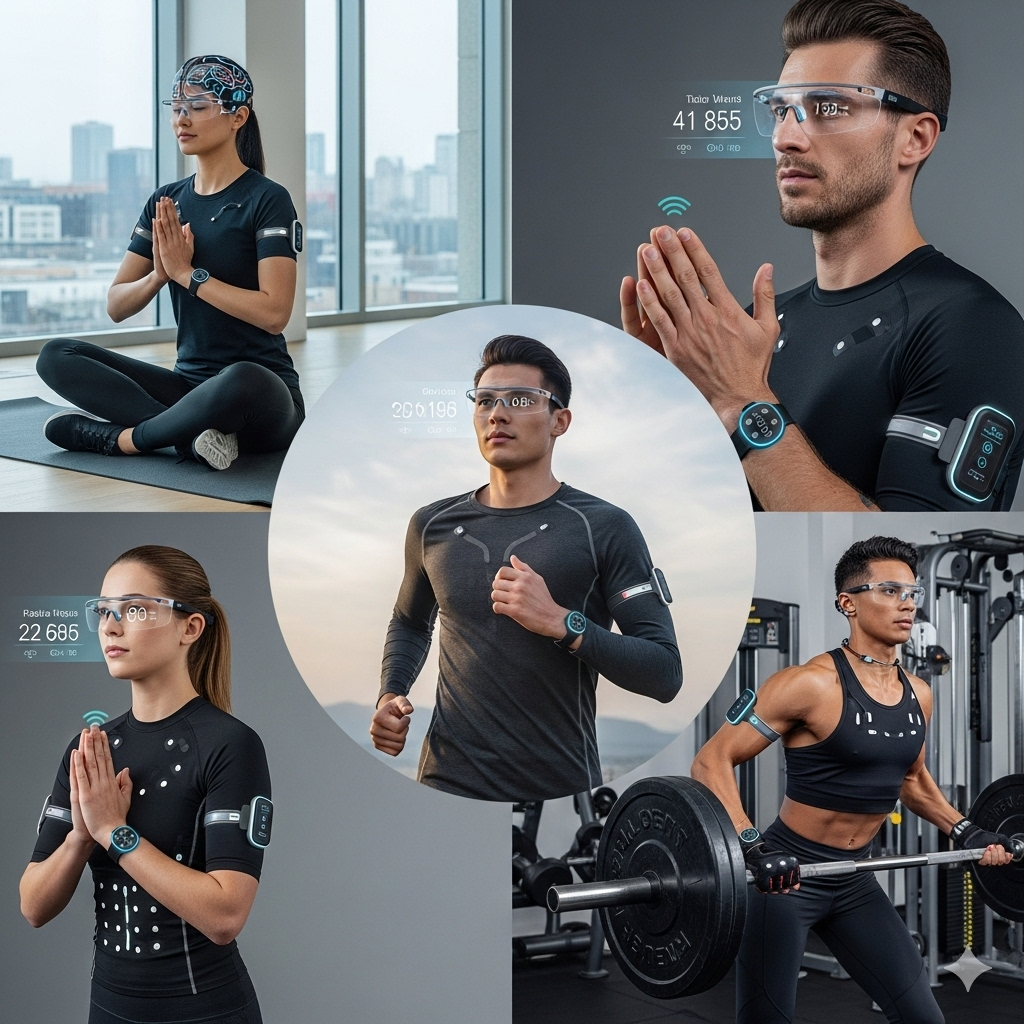
In the age of information, data has become the new currency, and this holds true not just in business and technology, but also in the realm of personal health and fitness. The rise of wearable technology has ushered in an era of the “quantified self,” where we can track, measure, and analyze a vast array of physiological metrics in real-time. This explosion of personal data has become the cornerstone of modern fitness biohacking, empowering individuals to move beyond generic advice and make highly informed, personalized decisions about their training, recovery, and overall well-being. This blog post will explore how leveraging wearable tech—from smartwatches and fitness trackers to continuous glucose monitors—can transform your fitness journey, turning your body’s signals into actionable insights for smarter, more effective biohacking.
Key Wearable Technologies for Fitness Biohacking
The market for wearable technology is vast and ever-expanding, with devices offering a wide range of features and functionalities. For the fitness biohacker, certain technologies stand out for their ability to provide deep, actionable insights into key aspects of performance and recovery.
Smartwatches & Fitness Trackers
Devices like the Apple Watch and Fitbit have become ubiquitous, serving as an entry point into the world of personal data tracking. They offer a wealth of information, including:
- Activity Levels: Tracking steps, distance, and calories burned provides a baseline understanding of daily movement and energy expenditure.
- Heart Rate Monitoring: Continuous heart rate tracking, both at rest and during exercise, allows for the monitoring of cardiovascular health and training intensity.
- GPS Tracking: For outdoor activities like running and cycling, GPS tracking provides valuable data on pace, distance, and elevation, enabling precise performance analysis.
Advanced Wearables (Oura Ring, Whoop)
Beyond basic activity tracking, advanced wearables like the Oura Ring and Whoop strap offer more in-depth physiological monitoring, with a strong focus on recovery and readiness. These devices provide insights into:
- In-depth Sleep Tracking: They go beyond simple sleep duration, analyzing sleep stages (REM, light, deep), disturbances, and overall sleep quality. This data is crucial for optimizing recovery and cognitive function.
- Heart Rate Variability (HRV): HRV, the variation in time between consecutive heartbeats, is a key indicator of autonomic nervous system balance and a powerful metric for assessing recovery and readiness to train. A higher HRV generally indicates better recovery and resilience to stress [1].
- Skin Temperature and Respiratory Rate: These metrics can provide early indications of illness or overtraining, allowing for proactive adjustments to your training plan.
The Oura Ring, for example, has been shown to be highly accurate in its temperature sensing, detecting even small deviations from baseline [2]. It also integrates with platforms like HRV4Training to help athletes maximize their performance by combining training load with HR and HRV data [3].
Continuous Glucose Monitors (CGMs)
Originally developed for individuals with diabetes, continuous glucose monitors (CGMs) have emerged as a powerful biohacking tool for athletes and fitness enthusiasts. These devices provide real-time insights into how your body responds to different foods and activities, allowing for highly personalized dietary adjustments. CGMs can help you:
- Optimize Fueling: By understanding your blood sugar response to various foods, you can choose the best pre- and intra-workout fuel to maintain stable energy levels and avoid performance-hindering spikes and crashes.
- Identify Food Sensitivities: CGMs can reveal how specific foods impact your glucose levels, helping you identify potential sensitivities that may be causing inflammation or energy fluctuations.
- Enhance Recovery: Stable blood sugar levels are crucial for optimal recovery. CGMs can help you make dietary choices that support this stability, leading to more efficient muscle repair and glycogen replenishment.
While the use of CGMs in non-diabetics is still a relatively new area of research, they hold significant promise for athletes looking to fine-tune their nutrition for peak performance [4, 5].
Smart Scales
Smart scales go beyond simply measuring weight, providing valuable data on body composition, including muscle mass, body fat percentage, and bone density. Tracking these metrics over time offers a more holistic view of your progress than weight alone, allowing you to make informed adjustments to your training and nutrition to achieve your desired body composition goals.
Biofeedback Devices
Biofeedback devices are designed to help you gain conscious control over physiological functions that are typically involuntary, such as heart rate, breathing, and even brainwave activity. These tools provide real-time feedback, enabling you to learn how to regulate your nervous system and improve your mental and physical state. For athletes, biofeedback can be used for:
- Stress Management: Learning to calm the nervous system can reduce performance anxiety and improve focus.
- HRV Training: By consciously influencing your breathing patterns, you can learn to increase your HRV, enhancing your recovery and resilience.
- Pain Management: Biofeedback techniques can be used to reduce chronic pain and muscle tension.
Translating Data into Actionable Biohacks
The true power of wearable technology lies not just in the data it collects, but in your ability to translate that data into actionable insights. This involves a systematic process of analysis, experimentation, and refinement.
- Identify Patterns: Look for correlations between your data and your subjective feelings of performance, recovery, and well-being. For example, do you notice a drop in your HRV after a particularly intense workout or a poor night’s sleep? Does a certain pre-workout meal lead to a more stable glucose response and sustained energy?
- Set Personalized Baselines and Goals: Use your data to establish your unique physiological baselines. This will allow you to identify significant deviations that may indicate overtraining, illness, or the need for a recovery day. Set personalized goals based on your data, such as aiming for a certain amount of deep sleep or maintaining a specific HRV range.
- Make Informed Adjustments: Use your insights to make informed adjustments to your training, nutrition, and lifestyle. If your HRV is consistently low, you may need to incorporate more recovery days or reduce your training intensity. If your CGM reveals a significant glucose spike after a certain food, you might experiment with a different pre-workout meal.
- Avoid Data Overload: While the amount of data available can be exciting, it can also be overwhelming. Focus on a few key metrics that are most relevant to your goals and avoid getting bogged down in every single data point. The goal is to use data to inform your decisions, not to become a slave to it.
Conclusion: The Future of Personalized Fitness
Wearable technology has revolutionized the world of fitness biohacking, providing us with an unprecedented level of insight into our own biology. By harnessing the power of personal data from smartwatches, advanced wearables, CGMs, and other devices, we can move beyond one-size-fits-all approaches and create truly personalized fitness and recovery strategies. The future of fitness is data-driven, and by embracing these technologies as allies in our journey, we can unlock new levels of performance, accelerate recovery, and achieve a state of optimal health and well-being. The key is to not just collect data, but to actively engage with it, turning insights into action and embarking on a continuous cycle of self-experimentation and optimization.
References:
[1] Heart rate variability: How it might indicate well-being – Harvard Health. Health.harvard.edu. Available at: https://www.health.harvard.edu/blog/heart-rate-variability-new-way-track-well-2017112212789
[2] After 4 months wearing the Oura Ring 4, here’s what you need to know. Womenshealthmag.com. Available at: https://www.womenshealthmag.com/uk/gym-wear/tech/a63755725/oura-ring-4/
[3] Oura Helps Athletes Maximize Performance With HRV4Training. Ouraring.com. Available at: https://ouraring.com/blog/oura-helps-athletes-maximize-performance-with-hrv4training/
[4] Continuous Glucose Monitoring in Endurance Athletes. Pmc.ncbi.nlm.nih.gov. Available at: https://pmc.ncbi.nlm.nih.gov/articles/PMC10933193/
[5] Will continuous glucose monitoring improve my performance?. Usada.org. Available at: https://www.usada.org/spirit-of-sport/glucose-monitoring-performance/
Tools mentioned in this guide
- Polar H10 chest strap: the reference for heart rate accuracy
- Garmin Forerunner 265: training readiness without a subscription
- Oura Ring 5: sleep and recovery trends